
 Available in US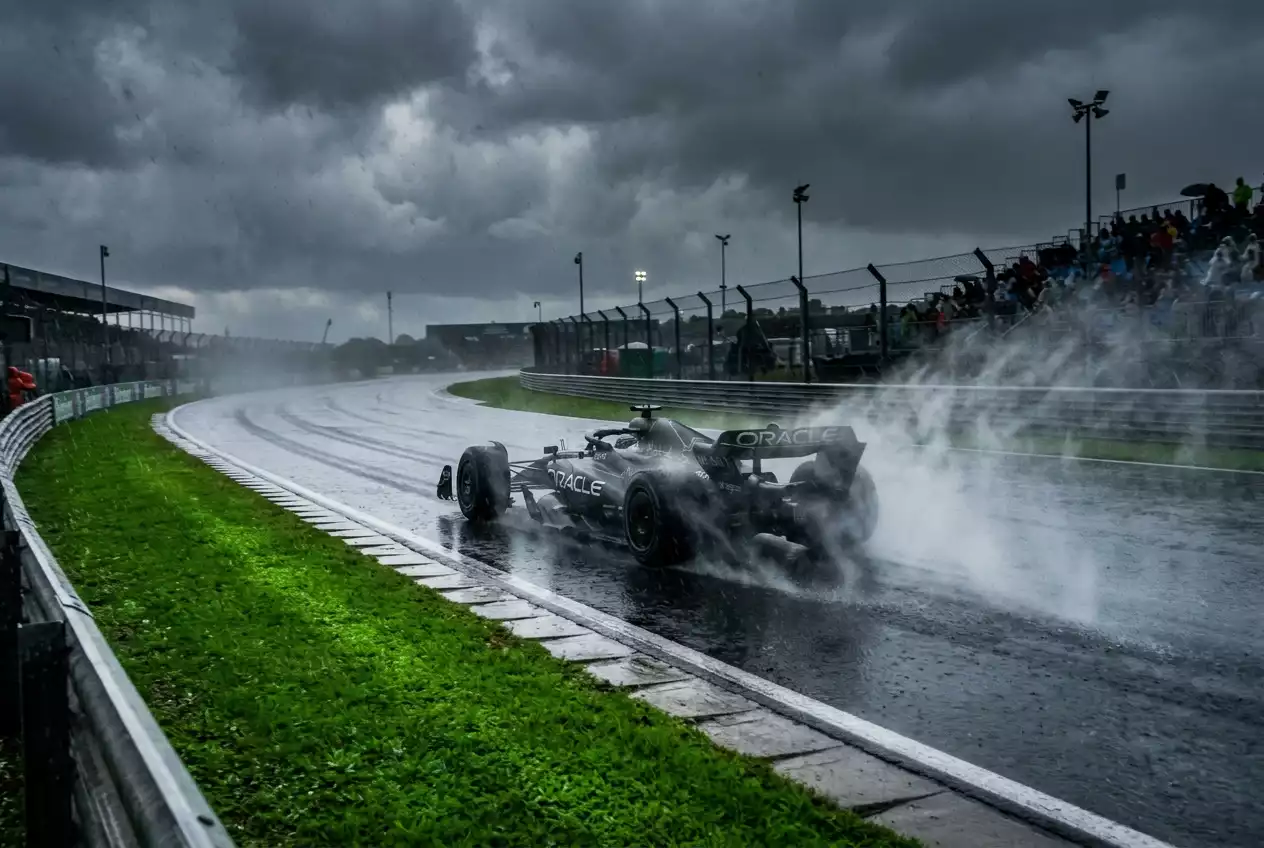
One Rain Cloud Can Wreck Every Pre-Race Prediction
Canada 2011. The race started in rain, was red-flagged for two hours, restarted in changing conditions, and the eventual winner had been running dead last after a drive-through penalty. His pre-race odds were somewhere around 10/1. The podium included a driver who had been 22/1. Ninety per cent of surveyed F1 fans say they are emotionally invested in race outcomes — and on days like that, the emotional investment meets chaos head-on.
Weather is the great equaliser in F1. In dry conditions, car performance dominates. The fastest car wins seventy to eighty per cent of the time. In wet conditions, driver skill, setup adaptability, tyre management on a surface with a fraction of normal grip, and team strategy in fluid conditions become the deciding factors. The competitive hierarchy scrambles, and the odds scramble with it.
ALT Sports Data’s Todd Ballard has described F1 as having an unmatched combination of speed, strategy and innovation. Weather is the variable that stress-tests all three simultaneously, which is why it produces the most volatile betting markets on the calendar. For punters willing to do the homework, wet races offer the fattest value gaps of any race-weekend scenario.
Weather Data Sources for F1 Bettors
Forget the generic weather app on your phone. For F1 betting, you need granular, localised weather data that covers the specific hours of the race, not just the daily forecast.
The most reliable source is circuit-specific radar. Many circuits are located in microclimate zones where conditions differ significantly from the nearest city. Spa-Francorchamps in Belgium is notorious — one end of the circuit can be bone dry while the other is soaked. Interlagos sits in a basin where afternoon storms develop rapidly. Silverstone is exposed to weather systems that sweep across the Midlands with little warning. What matters for betting is not whether rain is “possible” but the timing, intensity and duration of any precipitation relative to the race start.
I check three things forty-eight hours before a race: the hourly precipitation probability for the circuit location, the wind direction and speed (which affects drying time), and the radar imagery showing approaching weather systems. Twenty-four hours out, I refine the picture using short-range models that update every six hours. By Saturday evening, the forecast for Sunday’s race window is usually reliable within a thirty-minute margin of error — enough to inform a betting position.
Teams have their own meteorologists and real-time weather stations at the circuit. The information they act on is often visible through their behaviour: if teams are practising wet-weather starts on a dry Saturday afternoon, that tells you their forecasters expect rain on Sunday. Media reports from the paddock sometimes mention these preparations. It is not insider information — it is observable behaviour that few bettors think to monitor.
Wet-Race Dynamics: How Odds Move in Rain
When rain hits an F1 race, the live odds undergo a violent recalculation. The favourite’s odds lengthen. Outsiders shorten. The market is repricing around a new set of assumptions: wet-weather driver skill, tyre choices (intermediates vs full wets), and the increased probability of safety cars and red flags.
A third of F1 fans under thirty-five are more likely to watch a race when they have a bet on the outcome, and wet races deliver the most dramatic viewing — and the most dramatic odds movements. In a typical dry race, the race leader’s live odds might tighten from 1.50 to 1.20 over fifty laps. In a rain-affected race, the leader’s odds can swing from 1.50 to 3.00 and back to 1.80 within a ten-lap window as conditions change.
The key moments for live betting in wet races are tyre transitions. When the track is drying and teams switch from full wet tyres to intermediates, the driver who times the switch correctly gains an enormous advantage — sometimes several seconds per lap for four or five laps before rivals follow suit. If you are watching the track closely and spot a team bringing their driver in for intermediates while the rest of the field stays out on full wets, that is a live-bet signal worth acting on immediately.
The reverse transition — from dry tyres to intermediates when rain arrives mid-race — produces even larger swings. A driver on dry tyres in heavy rain loses three to five seconds per lap to anyone on the correct rubber. The first driver to pit for wets or intermediates when rain arrives has a window of dominance that the odds respond to with a lag. That lag — usually thirty to ninety seconds on most platforms — is where live-betting profits in wet races are made.
Track Temperature and Tyre Grip: A Subtler Factor
Rain is the headline weather variable, but track temperature is the one that moves markets without anyone noticing. Tyre grip is directly proportional to track surface temperature. Below a certain threshold — around twenty to twenty-five degrees Celsius for slick tyres — compounds struggle to generate sufficient grip, leading to understeer, longer braking distances and increased vulnerability for drivers who rely on rear-tyre traction.
An overcast morning session at a European circuit might produce track temperatures of eighteen to twenty degrees, while a sunny afternoon pushes the same surface to forty-five or fifty degrees. The soft compound that was fastest in the morning could be overheating and graining by the afternoon. If qualifying takes place in cool conditions but the race is expected in sunshine, qualifying performance becomes a weaker predictor of race performance. The driver who qualified on pole in cool conditions might struggle with tyre overheating in the warmer race, while a rival who was slower on Saturday thrives.
This is especially relevant for live betting during a race that starts early and runs into changing conditions. Circuits in the Middle East — Bahrain, Jeddah, Qatar — often start in daylight and finish under floodlights as track temperatures drop fifteen to twenty degrees during the race. The tyres behave differently in each phase, and the competitive order can shift as the surface cools. Pre-race odds are priced on average conditions; the driver who benefits from the temperature swing in the final stint is often underpriced at the start.
I have found that tracking the temperature delta between qualifying and race start, combined with each driver’s long-run practice data, gives me a consistent edge in podium and head-to-head markets at circuits with significant temperature variation. It is not glamorous analysis — no one wants to hear about track surface temperature at a dinner party — but it turns up value more reliably than any amount of speculation about driver talent or team politics.
