
UK Betting on F1: The Data-Driven Guide to Formula 1 Wagering
Data-driven insights for smarter F1 wagers.

Loading...
The 90-Second Version of This Entire Guide
- F1 represents just 0.4% of the global betting handle despite 827 million fans — the market is underdeveloped and edges exist for analytical punters willing to work with freely available race-weekend data.
- UK bettors operate under robust UKGC regulation, including a £5 online slot stake cap signalling tighter controls ahead; always verify your operator's licence.
- The 2026 technical reset and first-ever official betting partnerships (Betway, FanDuel, ALT Sports Data) are creating new markets and wider odds on an unpredictable competitive order.
- Build your own probability model before checking odds, start in secondary markets like podium finish and head-to-head, and log every bet to compound your edge across a full season.
Why F1 Is the Fastest-Growing Betting Sport in the UK
Nine years ago, I placed my first F1 bet on a wet Silverstone qualifying session. I lost. The odds looked right, the data backed the pick, and the rain still made a fool of me. That weekend taught me something it takes most punters far too long to learn: F1 is not football, not horse racing, and not tennis. The variables are different, the data is richer, and the market is still young enough that edges exist for anyone willing to do the work.
The sport I started betting on in 2017 barely resembles the one filling sportsbooks today. Formula 1's global fan base has hit 827 million people — a 63% jump since 2018. Here in the UK alone, 16.7 million fans follow the championship. The cumulative TV audience across the 2025 season reached 1.83 billion viewers. Social media following has grown for five consecutive years, now sitting at 114.5 million across platforms. By any measure, F1 is a cultural force.
And yet, for all that eyeball attention, Jonny Haworth — F1's Director of Commercial Partnerships — dropped a number at the BlackBook Motorsport Forum that stopped me mid-coffee: F1 accounts for just 0.4% of the overall global betting handle. Think about that. A sport with close to a billion fans, generating low-latency data at extraordinary volume, occupies less than half a percent of the money wagered worldwide on sport. For context, the UK's remote betting sector alone produced £7.8 billion in gross gambling yield between April 2024 and March 2025.
827 million
Global F1 fans in 2025, up 12% year-on-year
0.4%
F1's share of the global betting handle
£7.8 billion
UK remote betting, casino and bingo GGY, 2024-25
16.7 million
F1 fans in the United Kingdom
That gap between audience size and betting volume is not a sign that punters are uninterested. It is a sign that the market is underdeveloped — and underdeveloped markets reward early movers. The infrastructure is finally catching up: official betting operators appointed for the first time in the sport's history, a dedicated data supplier building real-time predictive models, and a regulatory framework in the UK that gives punters genuine protections other markets lack.
F1's 0.4% betting handle share puts it behind darts, snooker and table tennis in global wagering volume — despite having an audience roughly 80 times larger than professional darts.
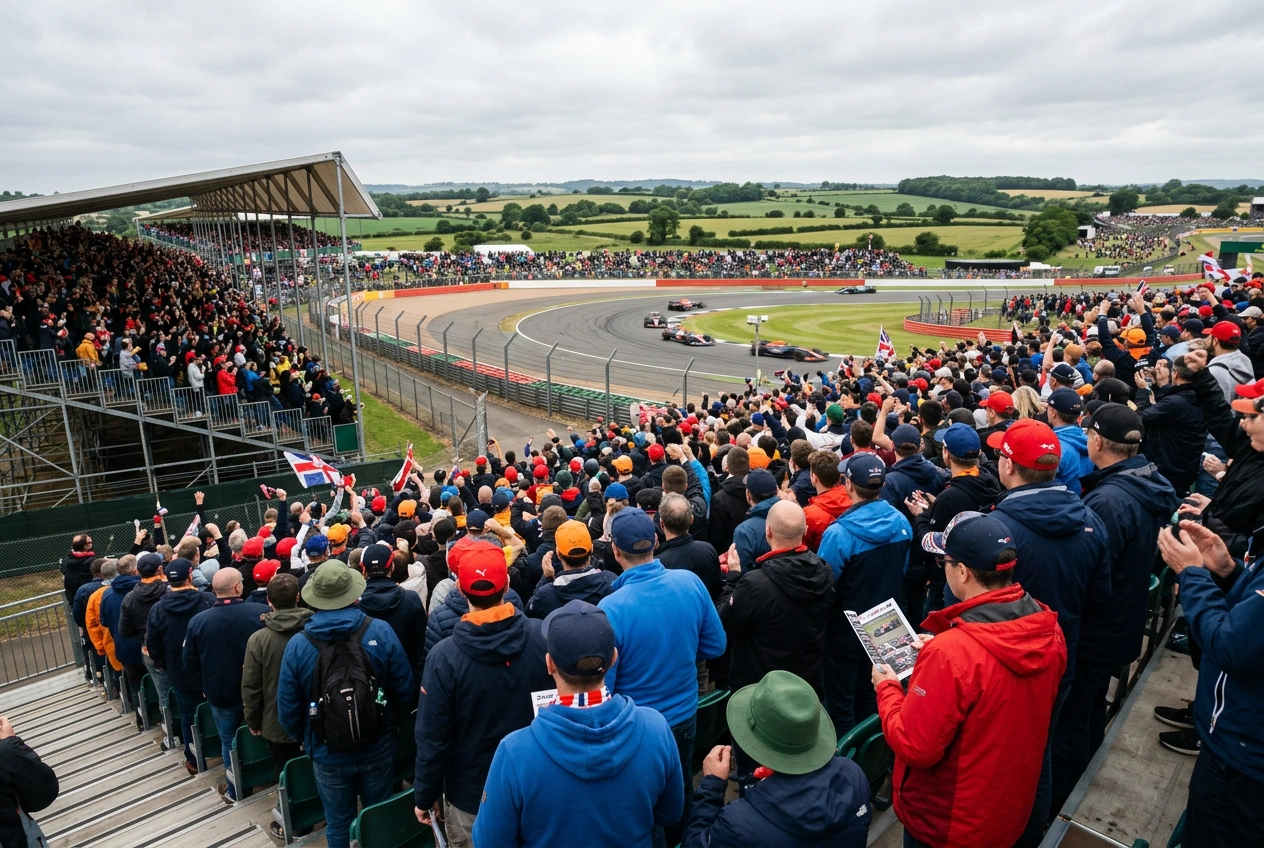
This guide is the resource I wish I had when I started. It is not a list of bookmakers with promotional codes. It is an analyst's walkthrough of how F1 betting actually works in the UK — the mechanics, the markets, the strategy, the regulation, and the data that separates a sharp punter from someone throwing darts at a grid sheet. Whether you have never placed a motorsport wager or you have been at it for seasons and want to sharpen your approach, the next several thousand words are built on numbers, not noise.
How F1 Betting Works: From Grid to Payout
My first attempt at explaining F1 betting to a mate went something like this: "You pick who wins, you get paid if you're right." He looked at me, opened his sportsbook app, and found 47 separate markets for a single grand prix. "Which one of these is 'who wins'?" he asked. Fair point. The sheer number of options is one reason motorsport wagering intimidates newcomers — but the underlying mechanics are straightforward once you see the structure.
Every legal F1 bet placed in the UK passes through an operator holding a licence from the UK Gambling Commission. This is not optional. The UKGC regulates all remote gambling offered to British consumers, and any sportsbook accepting your money without that licence is operating illegally. According to the Commission's own survey data, 48% of adults in Great Britain participated in some form of gambling over the most recent four-week measurement period. Strip out lottery players, and that figure drops to 27%. Within that group, 8% placed sports bets online or through an app — and a growing slice of those bets land on motorsport.
The UK Gambling Commission issues remote operating licences to betting companies that meet strict standards around fairness, player protection and anti-money-laundering controls. Before placing any F1 bet, confirm the operator displays a valid UKGC licence number — usually found in the site footer. If it is not there, walk away.
The basic flow works like this. A bookmaker sets odds on an outcome — say, a particular driver winning the race. Those odds represent the bookmaker's assessment of probability, adjusted with a margin that ensures the house stays profitable over time. You decide whether the odds on offer represent good value relative to your own assessment. If you think a driver's real chance of winning is higher than what the odds imply, you have a potential edge. You place a stake, the race happens, and you either collect or you don't.
That simplicity hides a layer of nuance in how odds are expressed. UK sportsbooks typically default to fractional odds — the format most British punters grew up reading. But decimal odds, standard across mainland Europe and increasingly common on UK platforms, present the same information in a way that makes comparison easier. And beneath both formats sits the concept every serious bettor needs to understand: implied probability, the mathematical translation of odds into a percentage chance of an outcome occurring. For a deep dive into the arithmetic and practical conversion methods, I have written a full breakdown in the odds explained guide.
Fractional odds — the traditional UK format expressed as a fraction (e.g. 5/1). The numerator shows profit relative to the denominator stake. A £10 bet at 5/1 returns £60 total: £50 profit plus the original £10.
Decimal odds — the European format expressed as a single number (e.g. 6.00). Multiply your stake by the decimal to calculate total return. A £10 bet at 6.00 returns £60.
Implied probability — the percentage chance of an outcome that the odds represent. Calculated by dividing 1 by the decimal odds and multiplying by 100. Decimal odds of 6.00 imply a 16.7% probability.
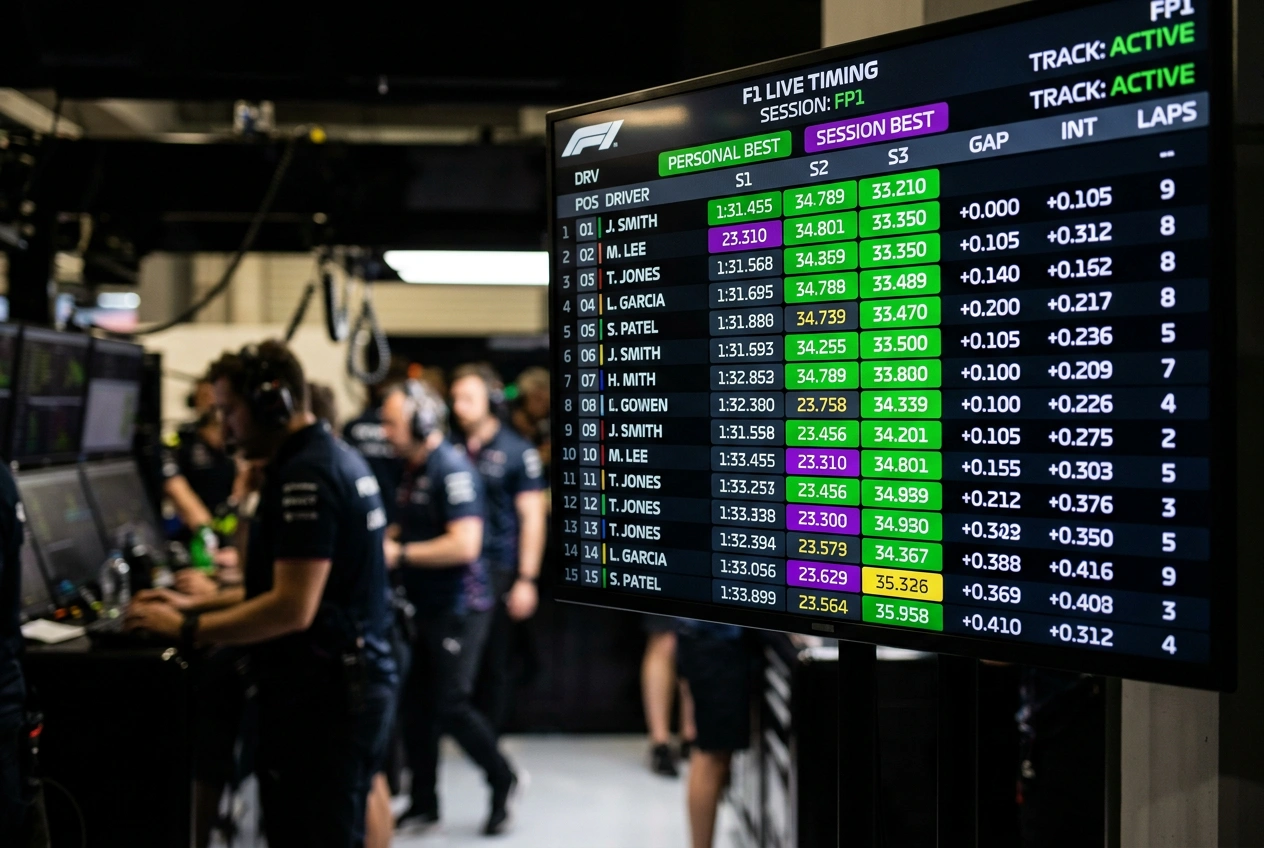
What makes F1 betting distinct from, say, football or horse racing is the data environment. Every session of a race weekend — three practice sessions, qualifying, sprint qualifying on sprint weekends, and the race itself — generates timing data measured to thousandths of a second across three track sectors. Tyre degradation rates, pit stop windows, fuel loads, weather conditions — all of it is publicly available and all of it moves markets. The challenge is not finding data. The challenge is knowing which data matters and when.
F1 Bet Types: Every Market Available to UK Punters
Here is a number that surprised me when I first saw it: 28% of F1 fans have placed an online sports bet in the past twelve months — the highest rate among fans of any major sport. Yet only 22% of those F1 fans who do bet have actually wagered on motorsport. The gap tells you something important: most people betting on sport already understand the basics of placing a wager. What they lack is a clear map of F1-specific markets. So let me draw that map.
The race winner market is the headline product. You pick a driver, the race happens, and if your driver crosses the line first, you collect. Simple in concept, brutal in practice — 20 drivers start, one wins, and the favourite often comes in at short odds that barely justify the risk. This is why experienced F1 punters spend as much time in the secondary markets as they do in the main event.
Podium finish and top-six markets lower the barrier. Instead of needing your driver to win outright, you need them to finish in the top three or top six. The odds are shorter, but the strike rate climbs meaningfully. For a driver who qualifies fourth or fifth, a podium bet can offer better expected value than a win bet on the favourite — particularly at circuits where overtaking is difficult and track position holds.
As Mark Wrigley, F1's Head of Betting, put it: everyone has their favourite drivers, and those battles are not always at the front of the race — they could be in the middle of the field. That observation captures exactly why head-to-head markets have become so popular. A head-to-head bet pits two drivers against each other, regardless of where they finish overall. You are betting on relative performance, not absolute result, which cuts out much of the noise from the rest of the grid.
Then there are championship outrights — season-long bets on who will win the Drivers' or Constructors' title. These are futures markets with odds that shift after every race, and they reward punters who get in early with a strong read on team form. Sprint race markets, fastest lap bets, qualifying specials, constructors' match bets and an expanding list of proposition bets round out the menu. For a complete catalogue of every market type with worked examples, I cover the lot in the F1 betting markets guide.
Two market types deserve special comparison here, because new punters constantly confuse them:
| Each-Way Bet | Podium Finish Bet |
|---|---|
| Two bets in one: a win bet plus a place bet | A single bet on a top-three finish |
| You pay double your intended stake | You pay one stake amount |
| Place terms set by the bookmaker (typically 1/4 or 1/5 odds for top 3) | Fixed odds offered on the podium outcome |
| If your driver wins, both parts pay out | Pays out whether the driver finishes 1st, 2nd or 3rd |
| If your driver finishes 2nd or 3rd, only the place part pays | Same payout regardless of podium position |
| Better when win odds are long (20/1+) and you want partial insurance | Better when you rate a driver's podium chance higher than the market does |
The distinction matters because each-way bets cost twice as much and split your exposure, while a podium bet concentrates your stake on the outcome you actually expect. I have seen punters lose money on each-way bets that would have been profitable as straight podium bets, purely because they did not understand what they were paying for.
Race winner calculation example
Suppose a driver is offered at fractional odds of 7/2.
Stake: £10
Profit if the driver wins: £10 x (7/2) = £35
Total return: £35 + £10 stake = £45
In decimal odds, 7/2 converts to 4.50. The same calculation: £10 x 4.50 = £45 total return.
Reading and Comparing F1 Odds
I remember the first time I tried comparing odds across three different sportsbooks for a single qualifying market. One showed 11/4, another showed 3.75, and a third displayed +275. All three were the same price, expressed in three different formats. If that sentence makes no sense to you yet, this section will fix that.
Fractional odds tell you the profit relative to your stake. If you see 11/4, the bookmaker is saying: for every £4 you risk, you stand to profit £11. Your total return on a £4 bet would be £15 — the £11 profit plus your £4 stake back. Decimal odds express the same information as a single multiplier. To convert 11/4 into decimal, divide 11 by 4 and add 1: that gives you 3.75. A £4 bet at 3.75 returns £15. Same outcome, different notation.
Fractional to decimal conversion
Fractional: 11/4
Step 1: Divide numerator by denominator: 11 / 4 = 2.75
Step 2: Add 1: 2.75 + 1 = 3.75
Decimal equivalent: 3.75
Conversion matters because comparison across bookmakers is how you find value. If one sportsbook prices a driver at 3.75 and another at 4.00, the second is offering a 6.7% better payout on the same outcome. Over a season of bets, those percentage differences compound. I keep a spreadsheet that logs odds from multiple platforms before every qualifying session specifically for this reason — it takes five minutes and has materially improved my returns.
Implied probability: what the odds really mean
Step 1: Take the decimal odds — say, 4.00.
Step 2: Divide 1 by the decimal odds: 1 / 4.00 = 0.25.
Step 3: Multiply by 100 to get a percentage: 0.25 x 100 = 25%.
The bookmaker's odds imply a 25% chance of that outcome. If your own analysis puts the probability at 33%, the odds represent value. If your model says 18%, the market has it right and there is no edge.
This is the foundation of every profitable betting decision. You are not betting on what you hope will happen — you are betting on where the bookmaker's implied probability is lower than your assessed probability. That single idea separates recreational punters from analytical ones, and it applies to every F1 market, from race winner to fastest lap.
In-Play Betting: Wagering While the Lights Are On
Lap 14 of a race I was watching last season, a safety car came out for debris at turn 6. Within 90 seconds, the driver I had backed at 5.00 pre-race was available at 2.80 in-play. Nothing about his car had changed. Nothing about his pace had changed. The field had simply bunched up behind the safety car, and the algorithm recalculated. That is in-play betting in a single anecdote: a market that moves on events you can see happening in real time, often faster than your finger can tap the screen.
Live F1 wagering has become a significant draw for younger fans in particular. Research from 2025 showed that 33% of F1 fans under 35 are more likely to watch a race if they have a pre-race or live bet running. The engagement loop is powerful — a bet makes every pit stop, every overtake, every weather shift personally consequential. But that same emotional intensity is what makes in-play the most dangerous market for impulsive punters.
In-play F1 odds can shift by 30-50% within a single lap during safety car periods, rain onset or multi-car incidents. The speed of movement means you are frequently betting against algorithms, not humans. If you do not have a pre-defined trigger for your in-play bet, you are reacting emotionally — and emotional bets are where bankrolls go to die.
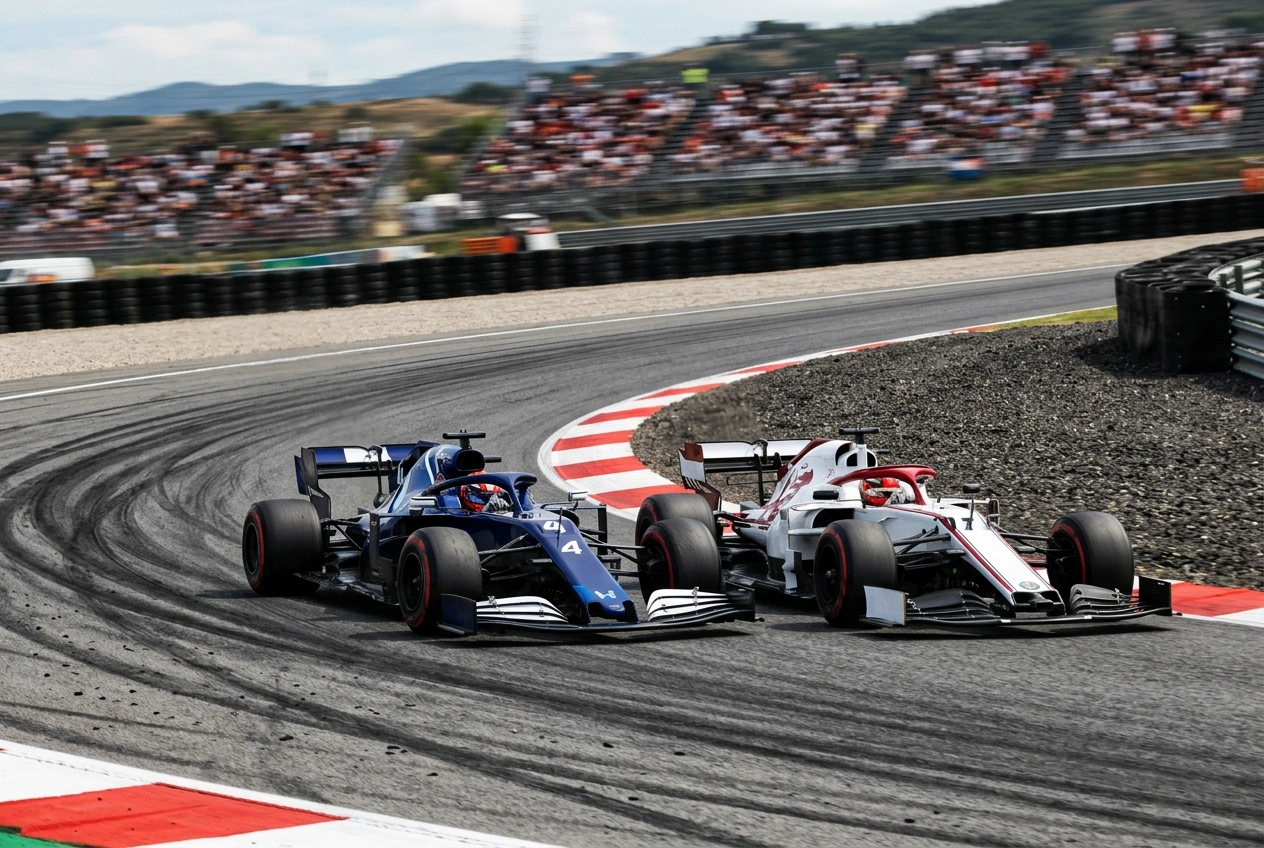
F1's in-play product is maturing rapidly. Emily Prazer, F1's Chief Commercial Officer, has stated that the sport is committed to delivering new and entertaining ways for audiences to engage — and betting sits squarely in that vision. The appointment of ALT Sports Data as the official betting data supplier, specifically tasked with building real-time predictive analytics and micro-market solutions, signals that the in-play experience will only get richer and faster.
The markets available during a race typically include live race winner, fastest lap, next driver to retire, next safety car, next pit stop, and various head-to-head matchups with continuously updating odds. The crucial point for this overview is that in-play F1 betting rewards preparation, not reaction. The punters who profit from live markets have already identified scenarios before lights out: "If a safety car comes before lap 15, Driver X on a longer first stint gains relative value." They are executing a plan, not chasing a thrill.
Safety car deployments compress the field, neutralise time gaps and often trigger a cascade of strategic pit stops. For in-play bettors, a safety car is the single most market-moving event in a race — it simultaneously devalues leaders on worn tyres and boosts drivers who have recently pitted on fresh rubber. Understanding this dynamic before it happens is the difference between a calculated bet and a panicked one.
For the full breakdown of in-play market types, timing triggers and platform latency considerations, I have put together a dedicated guide to F1 live betting.
Data-Driven Betting Strategy: Beyond "Check the Weather"
"Check the weather and look at qualifying." That is the extent of strategic advice on most F1 betting pages I have read, and it is roughly as useful as telling a poker player to "look at your cards." Weather matters, qualifying matters — but they are two inputs among dozens, and treating them as a complete strategy is why most punters end up funding the bookmaker's Christmas party.
Mark Wrigley, F1's Head of Betting, described the current moment well: bringing the sport to a betting market where there has been almost no investment on the product front means there is loads of green field ahead. That green field exists for bookmakers building new products, but it also exists for punters building analytical approaches — because most of the competition is still operating on gut feeling and driver loyalty.
The numbers bear this out. Most F1 fans who bet on sport never actually wager on motorsport itself — fewer than one in four do. The sport's betting audience skews young: 58% of motorsport bettors are aged 18-34, the second youngest profile in all of sports wagering. Young, engaged, data-literate, but largely unguided. That is the profile of someone who will respond to a structured approach.
My own pre-race routine has evolved over nine years into a five-step process I run before every qualifying session. It takes roughly 30 minutes, most of it spent on freely available timing data, and it has eliminated the majority of the "felt right, went wrong" bets that plagued my early seasons.
Five-step pre-race analysis
- Review FP1 and FP2 long-run pace — not single-lap times, but stint averages on each tyre compound. This reveals true race pace more accurately than qualifying simulations.
- Compare qualifying pace delta between teammates. A driver consistently three tenths off their teammate in practice may close that gap in qualifying or may not — the pattern over the previous five races tells you which.
- Check tyre degradation rates by compound across the field. High degradation on the soft compound at a particular circuit often points to an unexpected one-stop strategy, which reshuffles the podium predictions.
- Assess track-specific historical trends — not just who won last year, but overtaking rates, safety car frequency and the correlation between grid position and race result at that circuit.
- Scan for known grid penalties, power unit changes or gearbox swaps that will alter the starting order relative to qualifying pace.
That checklist is the foundation. The next layer is applying what the data tells you against the odds available in the market — which is the process of identifying value. I cover the mathematical framework for that in the full F1 betting strategy guide, including tyre degradation curve analysis and pit window calculations that go well beyond what this overview can cover.
Do
- Prioritise long-run pace data from practice sessions over single-lap qualifying simulations
- Estimate your probability for an outcome before checking what the bookmaker offers
- Focus on secondary markets (podium, head-to-head, fastest lap) where bookmaker margins tend to be thinner
- Weight circuit-specific data over season-wide trends — a driver's Monza form tells you little about Monaco
Don't
- Bet on your favourite driver because you want them to win — loyalty and value rarely coincide
- Treat qualifying result as a direct predictor of race result without accounting for tyre strategy and race pace
- Chase losses from Saturday's qualifying bets by increasing stakes on Sunday's race
- Ignore the grid penalty bulletin — a five-place drop can move race winner odds by 40% or more
One more point on strategy that gets overlooked constantly: F1 is a sport with 24 rounds across a season. Any single race is a noisy data point. Your edge reveals itself over a full calendar, not a single Sunday. The punters who profit are the ones tracking their bets, reviewing their model accuracy and adjusting — not the ones who nail one outsider and think they have cracked the code.
UK Regulation: UKGC, Stake Limits and Responsible Gambling
A few months into my F1 betting career, I received an email from a platform I had been using informing me that my account had been restricted. No explanation, no appeal, just a cap on maximum stakes. I was annoyed at the time. Looking back, I understand what was happening: the operator was complying with regulatory requirements around responsible gambling, triggered by my betting patterns. The UK's regulatory framework is, frankly, among the most robust in the world — and whether you find that reassuring or frustrating depends on which side of a restriction you are standing on.
The Gambling Commission oversees all licensed betting activity in Great Britain. The total gross gambling yield for the remote casino, betting and bingo sector reached £7.8 billion between April 2024 and March 2025, a 13.1% year-on-year increase. The market is large, growing, and heavily regulated. Every operator holding a UKGC licence must comply with strict conditions around customer protection, including affordability checks, self-exclusion tools and advertising standards.
Since April 2025, all online slot games in the UK are subject to a maximum stake of £5 per spin for adults, dropping to £2 for players aged 18-24 from May 2025. While this limit applies specifically to slots rather than sports betting, it signals the regulatory direction of travel: tighter controls on staking, particularly for younger players. Sports betting-specific stake limits may follow as the Gambling Act review progresses.
For F1 bettors specifically, the regulatory environment means several practical things. Every sportsbook you use must hold a valid UKGC remote operating licence. Your funds must be held in segregated accounts. You must have access to deposit limits, cooling-off periods, session time limits and self-exclusion tools. And the operator must intervene if your behaviour triggers responsible gambling indicators — which is what happened to me with that account restriction all those years ago.
The Commission's own survey data paints a picture of how widespread gambling is in British life: 48% of UK adults participated in some form of gambling over a recent four-week period. Most of that is the National Lottery, but the sports betting segment alone accounts for 8% of the adult population betting online or through apps in any given month. F1 sits within that ecosystem, subject to the same rules and protections.
GamStop is the UK's free self-exclusion scheme. Registering with GamStop blocks you from all UKGC-licensed online gambling sites for a chosen period — six months, one year or five years. GambleAware provides independent information, advice and support for anyone affected by gambling harm. Both services are entirely free and accessible to any UK resident.
I include this section not because regulation is glamorous reading, but because I have watched punters ignore the framework that protects them, sign up with unlicensed offshore operators chasing marginally better odds, and lose money with zero recourse when things went wrong. The UKGC licence is not bureaucracy for its own sake. It is the floor that keeps the game fair. Build your F1 betting activity on licensed platforms, use the self-management tools available, and treat regulatory protections as an asset rather than an inconvenience.
The 2026 Landscape: New Rules, New Partners, New Markets
If you had told me five years ago that Formula 1 would appoint official betting operators, partner with a dedicated wagering data supplier and move its US broadcast rights to Apple TV in a deal worth three quarters of a billion dollars, I would have laughed. Not because any single piece was implausible, but because the sport had been so aggressively cautious about betting involvement for so long that the shift seemed a generation away. Then 2026 arrived, and everything moved at once.
Betway
First-ever Official Betting Operator of Formula 1, announced March 2026
FanDuel
Official Betting Operator for USA and Canada, announced April 2026, with 17 million customers
ALT Sports Data
Official Betting Data Supplier since February 2025, building real-time predictive analytics
Apple TV
Exclusive US broadcast partner from 2026, five-year deal valued at $750 million
The Betway deal is historic in the most literal sense: no betting brand had ever held an official partnership with Formula 1 at the series level. Neal Menashe, CEO of Super Group — Betway's parent company — described it as reinforcing their commitment to sport at the highest level, promising customers access to the most innovative markets during race weekends. That language matters because "innovative markets" signals new bet types beyond the traditional race winner and championship outright — likely micro-markets built on real-time data, in-play propositions tied to specific laps or stints, and battery deployment props linked to the new 2026 power units.
Those 2026 power units are the technical headline. The new regulations mandate a roughly 50-50 split between internal combustion and electric power, a massive increase in the electrical component. The aerodynamic rules shift to active aerodynamics and reduced ground effect downforce. Taken together, the technical reset is the most dramatic since the hybrid era began in 2014 — and for bettors, it means the established performance hierarchy is up for renegotiation.
Emily Prazer, F1's Chief Commercial Officer, framed the broader strategic vision clearly: sports betting is an increasingly important part of the global fan experience, and Formula 1 is committed to delivering new and entertaining ways for audiences to engage with the sport. The ALT Sports Data partnership is the mechanism for delivering on that promise. Their mandate is to build a real-time analytics pipeline that translates F1's vast telemetry data into structured betting products — sector-by-sector pace predictions, tyre degradation probability models, pit window forecasting.
Apple's $750 million broadcast deal for US F1 rights is larger than the GDP of several small nations and represents the most expensive per-race broadcast contract in American sports history outside of the NFL.
The broadcast shift matters for UK bettors more than it might initially seem. Apple TV's entry changes viewing patterns — and viewing patterns correlate directly with betting activity. A platform built around interactivity and second-screen engagement could integrate betting prompts, live odds overlays or data dashboards in ways traditional linear broadcasters never could. Whether Apple will do any of that remains to be seen, but the infrastructure now exists.
For punters, the practical upshot of all this is straightforward: the 2026 season offers more markets, more data, more in-play opportunities and a less predictable competitive order than any season in recent memory. The technical reset alone means pre-season championship odds are more speculative than they have been in a decade — and speculative odds are where value lives. I have covered the full implications of the technical and commercial changes in the 2026 regulation changes guide.
Getting Started: Your First F1 Bet Step by Step
I still have the betting slip from my first F1 wager — not a physical slip, a screenshot I took because I was not entirely sure I had done it right. The process felt more complicated than it was, mostly because I overthought every step. So here is the version of that walkthrough I wish someone had handed me, stripped of every unnecessary decision point.
The majority of motorsport bettors — 63% by the most recent survey data — wager between £1 and £100 per month. That is the realistic range for recreational F1 betting, and it is where I would suggest starting. Not because larger stakes are irresponsible, but because your first season of F1 betting is a learning investment. You are calibrating your ability to assess probabilities, learning which markets suit your analytical strengths, and discovering which types of races your model handles well. Paying tuition fees of £5 or £10 per bet is a lot cheaper than the alternative.
Platform choice matters, but probably less than you think. The most popular sportsbook among motorsport bettors currently is Bet365, used by 41% of weekly bettors in the most recent data, followed by DraftKings and FanDuel. Any UKGC-licensed platform with F1 coverage will work for getting started. Look for the operator that gives you clear access to the markets you want — and access to the odds comparison that lets you check whether those markets are fairly priced.
Your first F1 bet: a full walkthrough
Step 1: Choose a UKGC-licensed sportsbook and open an account. Complete the identity verification process before race weekend — it can take 24-48 hours.
Step 2: Deposit a small amount you are comfortable losing entirely. Set a deposit limit that matches your monthly budget.
Step 3: Navigate to the F1 section on the day of qualifying or race day. Select the market you want — start with something straightforward like a podium finish or a head-to-head matchup.
Step 4: Check the odds. Open a second tab and compare the same market on at least one other licensed platform. If the difference is more than 5%, take the better price.
Step 5: Enter your stake. Review the potential payout shown on the bet slip. Confirm the bet.
Step 6: Watch the race. Resist the urge to place additional in-play bets until you are comfortable with how live markets behave.
Step 7: After the race, record the bet, the reasoning, the outcome and what you learned in a simple spreadsheet. This log is the single most valuable tool a new bettor can build.
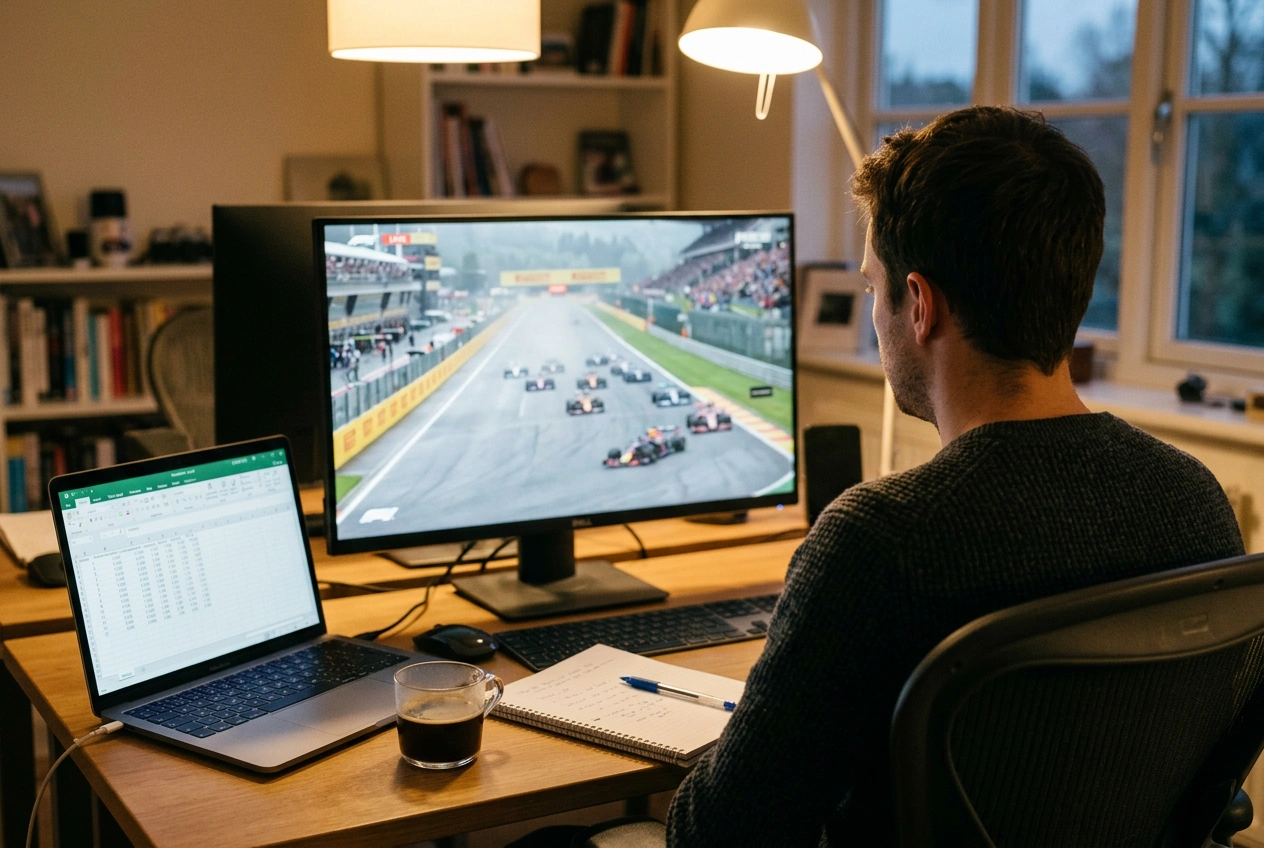
That seventh step is not optional decoration. Every professional bettor I know — in F1 and outside it — keeps records. The spreadsheet does not need to be complicated: date, race, market, odds, stake, outcome, profit or loss, and a one-line note on what your reasoning was. Over a full season, that log reveals patterns no amount of post-race analysis can replicate. You will see which markets your judgement is sharpest on, which circuits your model misreads, and whether you are actually generating positive value or just getting lucky.
Starting with the basics in place, the next step is building the habits that compound small edges into consistent results across a full season.
Quick Wins: Five Habits That Improve Your Hit Rate
Around my fourth season of F1 betting, I stopped trying to eliminate bad bets and started focusing on building good habits. The shift sounds subtle, but it changed my results more than any single analytical improvement I had made. Bad bets are infinite — there is always a new way to lose money. Good habits are finite, repeatable and compounding. Here are the five that made the biggest difference.
The first habit is running your pre-race data check before you even look at the odds. I mentioned the five-step process earlier, and the order is critical: data first, odds second. The moment you see a price, your brain anchors to it. If you see a driver at 12/1 before doing your analysis, you will unconsciously frame your research around whether 12/1 is fair rather than building an independent probability estimate. That anchoring bias costs punters more money across a season than any single bad pick.
Second, set a staking plan that caps your exposure per race weekend — not per bet, per weekend. A race weekend can offer qualifying bets on Saturday, sprint bets if applicable, and race bets on Sunday. Without a weekend cap, it is easy to spread five or six bets across two days and realise you have staked three times what you intended. My own rule is simple: no more than 3% of my betting bankroll on any single race weekend, regardless of how many markets I find attractive.
Third, start in the secondary markets. The race winner market is seductive because it is the headline, but the margins are widest on the favourite and the variance is highest in a 20-driver field. Podium finish, head-to-head and qualifying markets offer tighter margins and more opportunities to exploit your data edge. I spent my first two seasons grinding out returns in head-to-head markets before I felt confident enough to make consistent race winner plays.
Fourth, use deposit limits and session reminders as standard practice — not as a sign of a problem, but as a structural guardrail. Every UKGC-licensed platform offers these tools. Set them during sign-up and forget about them. They exist to prevent the 2am post-race "one more bet" impulse that has cost every punter I know at least once.
Fifth, make the bet log from the getting-started walkthrough a non-negotiable part of every race weekend. I keep mine in a spreadsheet with the pre-bet reasoning, not just the outcome. After ten races, patterns emerge: circuits where my model underperforms, market types where I consistently find value, emotional bets I placed against my own rules. That log is the compound interest of F1 betting — it does nothing for you in week one and everything for you in year two.
Do
- Analyse practice data before checking bookmaker odds to avoid anchoring bias
- Cap your staking at the weekend level, not just the individual bet level
- Start with head-to-head and podium markets where margins are thinner
- Activate deposit limits and session reminders during account setup
- Log every bet with your pre-bet reasoning, not just the result
Don't
- Look at odds before completing your own probability assessment
- Stack multiple bets across qualifying, sprint and race without a weekend budget
- Default to the race winner market when secondary markets offer better value
- Treat self-management tools as something only problem gamblers need
- Bet without recording — untracked bets are unlearned bets
Frequently Asked Questions
Is F1 betting legal in the UK?
Yes. Betting on Formula 1 is fully legal in the United Kingdom for anyone aged 18 or over. All operators offering F1 markets to UK customers must hold a valid remote operating licence from the UK Gambling Commission. This licence ensures the operator meets standards for fairness, customer fund protection and responsible gambling. You can verify any operator's licence status on the Gambling Commission's public register.
What types of bets can you place on Formula 1?
The range of F1 markets has expanded significantly. Core markets include race winner, podium finish (top three), top-six finish, qualifying pole position, fastest lap, driver head-to-head matchups and championship outrights for both the Drivers' and Constructors' titles. Beyond those, you will find sprint race markets on sprint weekends, each-way bets, accumulators combining multiple selections, bet builder options that let you create custom combinations within a single race, and an increasing number of in-play markets available during the race itself. The market depth varies between operators, so it pays to check coverage before committing to a single platform.
How do F1 betting odds work — fractional vs decimal?
Fractional odds, the traditional UK format, show profit relative to stake. Odds of 5/1 mean £5 profit for every £1 staked, with a total return of £6. Decimal odds, standard in Europe and increasingly used on UK platforms, express total return as a single multiplier. The same odds in decimal are 6.00 — multiply your stake by 6.00 to get your total return. To convert fractional to decimal, divide the first number by the second and add 1. Both formats represent identical payouts; decimal is generally easier for comparing across bookmakers and calculating implied probability.
Can you bet on F1 live during a race?
Yes, in-play betting is available on most UKGC-licensed sportsbooks during F1 races. Live markets typically include updated race winner odds, fastest lap, next driver to retire and various head-to-head matchups. Odds adjust continuously based on track events — safety car deployments, pit stops, retirements and weather changes all trigger rapid price movements. Be aware that in-play F1 odds move faster than in most sports due to the real-time data feed, so platform speed and a clear pre-race plan matter more than in any pre-race market.
What is an each-way bet in F1?
Each-way bet — a bet that is actually two bets in one: a win bet and a place bet, each at the same stake. If your driver wins, both parts pay out. If your driver finishes in a place position (typically top three for F1, though terms vary by bookmaker), only the place part pays — at a fraction of the win odds, usually one quarter or one fifth. Because you are placing two bets, an each-way wager costs twice the unit stake. For example, a "£5 each way" bet costs £10 total. Each-way bets offer the best value when backing outsiders at long odds, where the place return alone can be meaningful.
How do the 2026 regulation changes affect F1 betting markets?
The 2026 technical regulations introduce a near-equal split between combustion and electric power, active aerodynamics and significantly altered car dimensions. For bettors, the practical impact is a competitive order reset — teams that dominated under previous regulations may not adapt fastest to the new rules, making pre-season and early-season championship odds more speculative than in stable-regulation years. Additionally, F1's appointment of official betting operators and a dedicated data supplier signals new market types built around real-time telemetry, including potential micro-markets on battery deployment, energy harvesting and hybrid-specific performance metrics. The 2026 season is likely to offer both wider odds and more diverse markets than any recent season.
What data should you analyse before placing an F1 bet?
The core data points are practice session long-run pace (stint averages, not single-lap times), qualifying pace gaps between teammates and across the grid, tyre degradation rates by compound from practice sessions, circuit-specific historical trends (overtaking rates, safety car probability, correlation between grid position and race result), and any confirmed grid penalties. Publicly available timing data from FP1, FP2, FP3 and qualifying provides most of what you need. Track temperature, weather forecasts and recent power unit reliability patterns add secondary layers. The key is building your own probability estimate from this data before looking at bookmaker odds, which prevents anchoring bias from distorting your assessment.