
 Available in US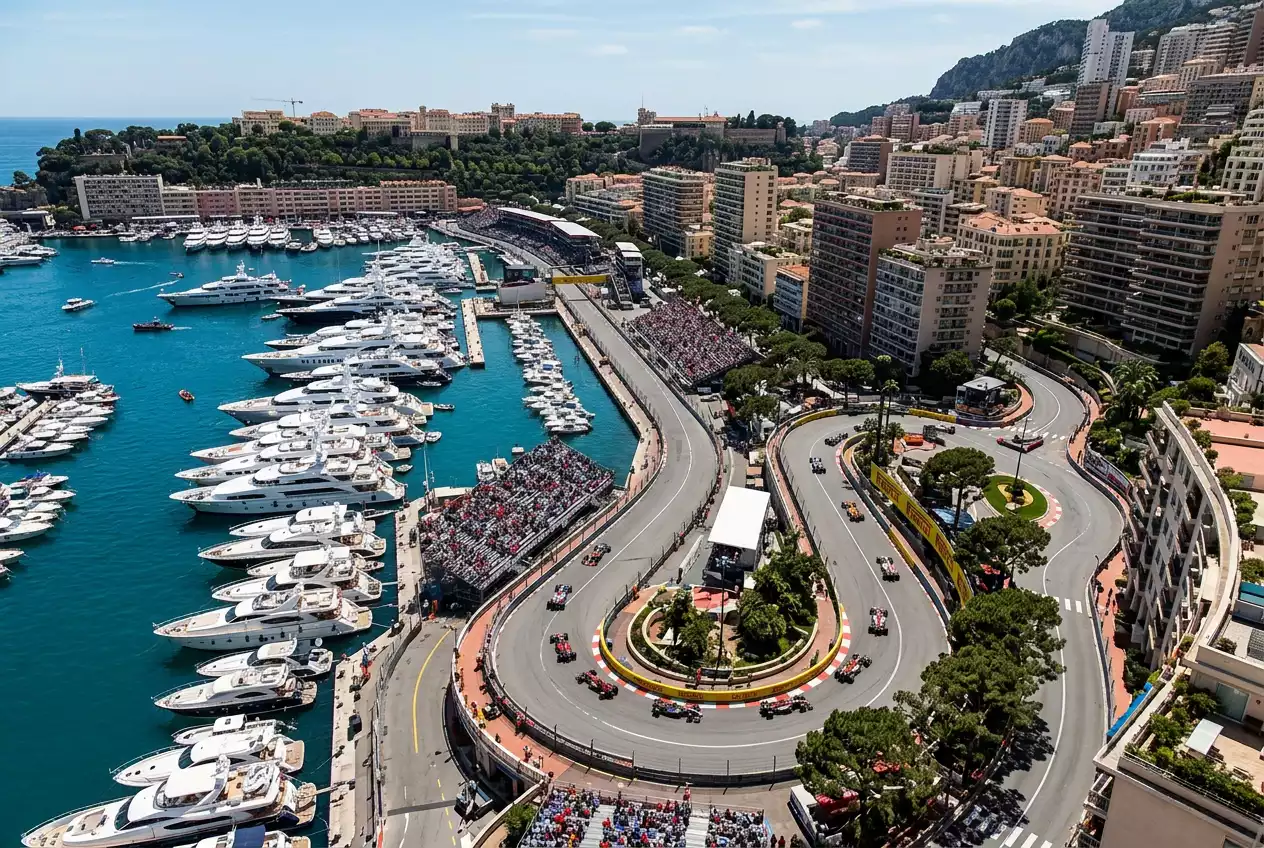
The Race Where Saturday Decides Sunday
I have placed more losing race-winner bets at Monaco than at any other circuit on the calendar. And I have made more money at Monaco than almost anywhere else — from qualifying markets. That paradox tells you everything about this race: the Sunday grand prix is often a procession, but Saturday’s qualifying session is one of the most drama-rich, skill-dependent hours in all of sport.
F1’s record season attendance of 6.7 million across 2025 confirms what anyone who has stood at Sainte Devote already knows — the spectacle draws people. But Monaco’s spectacle is front-loaded into qualifying. The circuit is so narrow, with barriers so close to the racing line, that overtaking during the race is nearly impossible without a significant pace advantage or a strategic intervention. The driver who starts on pole position at Monaco wins the race more than sixty per cent of the time, a conversion rate far higher than the calendar average. If you are betting on Monaco, your analytical focus belongs on Saturday.
Why Qualifying Dominates Monaco Race Outcomes
Monaco’s defining characteristic is width — or rather, the lack of it. The circuit threads through the streets of Monte Carlo with barriers that leave almost no run-off. The racing line is essentially one car wide through Massenet, the Swimming Pool section, and Rascasse. A slower car in front of a faster car can hold position for the entire race simply because there is no physical space to pass.
DRS, which is the primary overtaking tool on conventional circuits, is less effective at Monaco. The DRS zone is short, and the tight corner following it does not allow the trailing driver to carry a significant speed advantage into a braking zone. The result: track position is king. The driver who qualifies ahead stays ahead unless strategy or a safety car intervenes.
This creates a unique betting dynamic. On most circuits, a strong qualifying performance is a good predictor of race success, but plenty of overtaking happens during the race to shuffle the order. At Monaco, qualifying is almost the race. The grid position locked in on Saturday carries through to the podium on Sunday with minimal alteration. For bettors, this means qualifying data is not just useful — it is the primary input. Race-pace data from practice matters less at Monaco than at any other circuit because the ability to use that pace in the race is constrained by the inability to overtake.
Street Circuit Market Peculiarities
Ninety per cent of surveyed F1 fans report being emotionally invested in race results, and Monaco amplifies that emotion with an event that doubles as a glamour showcase. But the emotion can blind bettors to the specific market features that make street circuits different from permanent tracks.
First, the qualifying market at Monaco is underpriced relative to its predictive power. Because qualifying converts to a race win so reliably here, the pole position market effectively doubles as a race winner market at a fraction of the odds scrutiny. If you believe a driver will qualify on pole, you can often get better effective odds by backing them in the qualifying market than in the race winner market, because the qualifying odds reflect only the Saturday probability while the race winner odds already incorporate Monaco’s track-position advantage.
Second, each-way bets have a different risk profile at Monaco. On a standard circuit, a driver who qualifies sixth might fight their way to a podium through overtaking and strategy. At Monaco, sixth on the grid usually means sixth at the finish. Each-way becomes more attractive only if you are backing a driver you believe will qualify in the top three but the market has them priced as a fourth- or fifth-place qualifier. The each-way place terms still pay for a podium, but the path to podium at Monaco runs exclusively through qualifying position.
Third, head-to-head markets shift in value at street circuits. The teammate battle is decided almost entirely on Saturday qualifying, where tenths matter more than anywhere else. A driver who is 0.15 seconds faster than their teammate in qualifying at Monaco will likely beat them in the race too, barring mechanical failure. Cross-team head-to-heads are trickier because the car’s suitability to tight, slow-speed corners varies — a team that is fifth-fastest at a conventional circuit might be third-fastest at Monaco if their car’s low-speed mechanical grip is strong.
The Safety Car Factor at Monaco
Monaco has one of the highest safety car rates on the calendar. The barriers are unforgiving, the circuit demands perfection on every lap, and small errors — a wheel touching the wall at the Swimming Pool, a misjudged approach to Tabac — result in damage and debris. Over the past decade, more than seventy per cent of Monaco races have featured at least one safety car deployment.
Safety cars at Monaco have an outsized effect on the race because they erase time gaps without creating overtaking opportunities. The driver who was two seconds behind the leader is now right on their gearbox, but they still cannot pass because the circuit has not changed. What does change is pit-stop strategy. A safety car opens a pit window where drivers can stop for fresh tyres without losing track position, and the teams that react fastest gain a strategic edge that plays out in the final stint.
For live bettors, the safety car at Monaco is both opportunity and trap. The immediate odds reaction — race leader’s odds drifting, chasing pack’s odds shortening — is often an overreaction because the leader usually maintains position through the restart. The real betting value under a Monaco safety car is in the head-to-head and podium markets, where the compressed field creates possibilities for pit-stop-driven position changes that do not require on-track overtaking.
Red flags are the exception. A red flag stops the race, brings all cars into the pits, and allows standing restarts. At Monaco, red flags produce genuine drama because the restart effectively resets the race at a shortened distance, and the cold-tyre phase after a restart is one of the few moments where overtaking becomes possible. If you are watching a Monaco race and a red flag appears, the live markets will reprice everything — and the repricing usually overcorrects, offering value on the driver who was leading before the stoppage to reassert their advantage at the restart.
