
 Available in US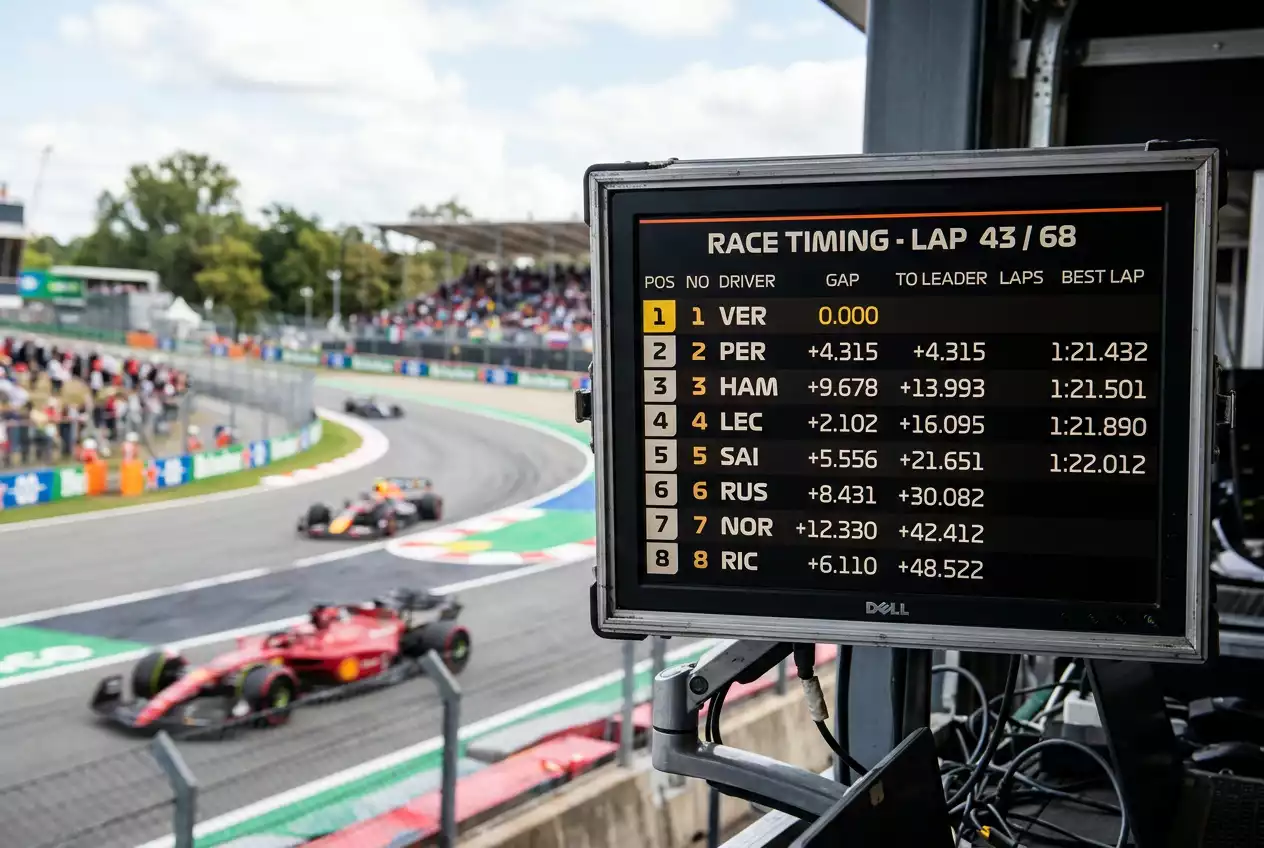
Betting While the Lights Are On
My biggest live-betting win came not from a flash of inspiration but from counting laps. Lap thirty-eight of fifty-seven, the leader on worn hard tyres, the driver in third on mediums that were eight laps younger. I calculated the closing rate at 0.4 seconds per lap, multiplied by the remaining distance, and the gap was going to close to DRS range by lap fifty-two. The live market had the leader at 1.30. Five laps later, the overtake happened exactly where the arithmetic said it would, and the new leader’s odds had been 3.50 when I placed the bet. That is live F1 betting at its best — not guessing, but reading numbers the market has not yet absorbed.
In-play wagering accounts for a growing share of F1 betting activity, powered by the real-time data feeds that F1’s partnership with ALT Sports Data as Official Betting Data Supplier makes possible. The live market reprices every few seconds, responding to position changes, pit stops, safety cars and weather shifts. But the algorithms driving those prices react to events after they happen. A bettor watching the timing screen can spot the probability shift before it shows up in the results — and that lead time is the entire edge.
The Three Phases of a Live F1 Bet
Every grand prix unfolds in three distinct phases, and each one offers different live-betting dynamics.
The opening phase — laps one through ten — is defined by the start, first-corner drama, and the initial stint settling. The start is the highest-variance moment: grid positions shuffle, incidents take out contenders, and the leader emerging from turn one may not be the driver who started on pole. Live markets during this phase are volatile and reactive. The best approach is defensive — avoid chasing the chaos and wait for the field to stabilise. If a pre-race favourite survives the opening laps in a strong position, their odds will tighten, and there is no additional information in that movement. If they have dropped positions, the question is whether the drop is permanent (car damage, strategy error) or recoverable (lost one place to a slower car that will fade). That distinction is where early-race live bets find value.
The mid-race phase — roughly laps eleven through forty on a standard race — is dominated by pit-stop strategy. This is the richest phase for live betting because the market prices positions as they stand on track, but the real competitive picture depends on who has stopped and who has not. A driver who appears to be leading by fifteen seconds may actually be behind in the strategic cycle because they have yet to make their pit stop. The live odds on that driver will be short, but the true probability of them winning is lower than the market suggests. Tracking pit-stop cycles — who has stopped, who has not, and what the time delta is between them — is the single most important skill for mid-race live betting.
The final phase — the last fifteen to twenty laps — is where the race resolves. Strategies have played out, positions have settled, and the competition narrows to a handful of cars fighting for each position. This phase is the most predictable because the remaining variables are few: tyre degradation, fuel load, and any late-race safety car. If a driver is closing at a consistent rate and the arithmetic says they will catch the car ahead before the chequered flag, the live market will price this eventuality — but often with a one- or two-lap delay that gives you a narrow window to act.
Reading the Timing Screen in Real Time
The F1 live timing app and broadcast graphics show gap data to the car ahead and to the leader. For live betting, the relevant number is the interval change — how the gap is evolving lap by lap. A static gap means the two drivers are matching pace. A closing gap of 0.3 seconds per lap means the trailing driver is faster. An opening gap means the leading driver is pulling away.
I track interval changes on a simple notepad during the race, jotting down the gap to the car ahead every five laps. This gives me a closing rate that I can project forward. If the gap is 4.2 seconds and the closing rate is 0.35 seconds per lap, the trailing driver needs twelve laps to reach DRS range. If there are fifteen laps remaining, the overtake is likely. If there are eight laps remaining, it is not. This arithmetic takes thirty seconds and gives me a concrete basis for a live bet, rather than relying on the commentator’s excitement or the crowd’s reaction.
Sector splits during the race add precision. If the trailing driver is gaining all their time in Sector 2 (the overtaking zone) but losing time in Sector 3 (a twisty section where dirty air hurts), the closing rate will produce an overtake only when the gap falls below DRS-activation distance. If they are gaining time in all three sectors, the overtake may happen earlier, through sheer pace rather than DRS assistance. Sector-level data turns a rough projection into a targeted one, and targeted projections are what convert live observations into profitable bets.
Safety Cars, Red Flags and Live Market Shocks
The 1.83-billion-strong TV audience watches safety cars for drama. I watch them for mispriced odds. A safety car collapses time gaps and creates free pit-stop opportunities, which means the market must reprice every driver’s probability simultaneously. That repricing is imperfect — the algorithms respond to the safety car event, but they struggle to model the tyre-strategy implications instantly.
My live-bet protocol during safety cars is simple. I check who pits, note their new tyre compound, and compare the remaining race distance to the tyre life. A driver who emerges from the pits on fresh softs with fifteen laps to go is on a different race from a driver who stayed out on thirty-lap-old hards. The market will reprice this eventually, but the lag between the pit stops happening and the odds fully adjusting is typically two to four laps. That window is the profit zone.
Red flags are rarer but more disruptive. A red flag stops the race entirely and allows teams to change tyres, adjust the car, and reset strategy. The restart is effectively a new race from a standing start. Red-flag restarts produce the highest variance of any live-betting scenario because the cold-tyre phase after a restart creates overtaking opportunities that the normal race flow does not. If you have a view on which driver handles cold-tyre restarts best — check their historical performance after red flags and safety car restarts — the red-flag moment is the time to deploy your heaviest live-bet stake.
Discipline and Bankroll in Live Markets
Live betting is addictive. The constant flow of new information, the shifting odds, the urgency of the moment — it creates a psychological pull toward over-trading. I have been there. My early seasons of live betting featured far too many bets per race, too little sizing discipline, and a tendency to chase positions that had already been priced in.
Now I limit myself to a maximum of three live bets per race. This forces selectivity. I only act when the arithmetic gives me a concrete edge — a closing rate that the market has not yet absorbed, a safety car pit-stop shuffle that has been underpriced, or a strategic divergence that will resolve in the next ten laps. Three bets per race, each with a clear thesis and a defined exit (the event that will confirm or deny the thesis), keeps my live-betting disciplined and profitable. The races where I place zero live bets are the ones where the market was efficient and the conditions were stable. Walking away from a race without a live bet is not a failure — it is proof that the discipline is working.
