
 Available in US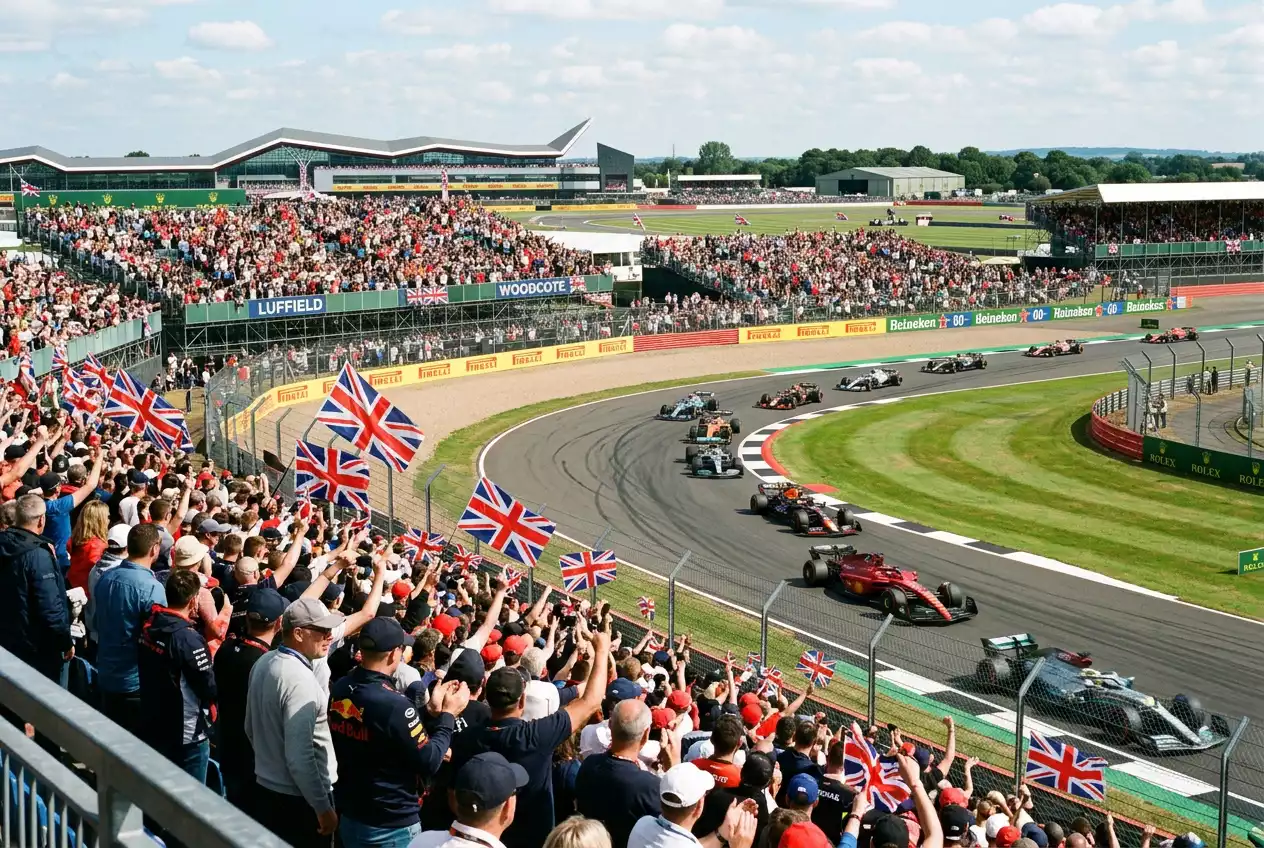
Silverstone: The UK Bettor’s Home Race
Half a million people packed into Silverstone over the 2025 race weekend — the largest single-event sporting attendance in Britain. If you were among them, you already know the atmosphere is unlike anything else on the calendar. If you were watching from a sofa, you were part of a domestic fan base that reaches 16.7 million people in the UK alone. Either way, the British Grand Prix is the one weekend of the year where the emotional pull of home-crowd excitement collides with the analytical demands of a serious bet.
I have attended seven Silverstone race weekends as a bettor, and the lesson that keeps repeating itself is this: the circuit rewards a specific kind of car and a specific kind of driver. If you understand what Silverstone demands, you can cut through the noise of patriotic bias and home-crowd hype to identify where the real value sits in the markets.
Circuit Characteristics That Shape the Odds
Silverstone is a high-speed, high-downforce circuit. The Maggots-Becketts-Chapel complex is one of the fastest and most demanding sequences of corners in all of motorsport — a series of direction changes taken at over 250 kilometres per hour that punishes any car lacking aerodynamic stability. Copse, Stowe and the newly reprofiled sections demand confidence from the driver and precision from the chassis.
What this means for betting: teams that excel in high-downforce configurations tend to overperform at Silverstone relative to their season average. If a constructor has been strong at other high-speed circuits earlier in the calendar — Barcelona, Suzuka, Spa — they are likely to be competitive at Silverstone too. Conversely, a team that has been quick at low-speed street circuits but mediocre at fast tracks is not suddenly going to find pace here just because the British crowd is cheering.
Wind is the under-appreciated variable. Silverstone is an exposed airfield in the Northamptonshire countryside, and the wind direction shifts between sessions. A headwind into Copse changes the braking point and the cornering speed. A crosswind through Becketts unsettles the car mid-corner. Some cars are more sensitive to wind than others, and a driver who topped FP2 in calm conditions may slide down the order in a blustery qualifying session. Checking the wind forecast for each session, not just the rain forecast, adds a layer of insight that most bettors overlook.
Tyre degradation at Silverstone is typically high because the fast corners generate enormous lateral forces that scrub the rubber. The medium and hard compounds tend to be the race tyres; the soft is often used only for qualifying. High degradation means strategy matters, and the undercut — pitting before a rival to gain time on fresh rubber — is a powerful weapon. Races at Silverstone frequently hinge on pit-stop timing, which makes live betting particularly attractive here.
Historical Betting Trends at Silverstone
Over the past decade, Silverstone has rewarded consistency over flash. The race winner has come from the top three on the grid in about seventy per cent of recent editions. Pole position converts to a win more often here than at most circuits, partly because overtaking on the opening lap through Abbey and Village is risky at high speed, and partly because the leader can control the pace through the high-downforce sections where DRS is less effective.
But the exceptions are where the money is. Silverstone has produced dramatic races when rain arrives, when a safety car bunches the field after a high-speed incident, or when the British weather turns a one-stop strategy into a two-stop scramble. The 2022 British Grand Prix — with a red flag, a multi-car incident and a last-lap fight for the podium — is a recent reminder that Silverstone’s volatility is real, even if it does not appear in every year’s headline result.
For each-way bettors, Silverstone’s historical data shows that the podium often includes at least one non-favourite. A driver priced around 8/1 to 14/1 who qualifies in the top five or six has a genuine shot at the podium, particularly if the race involves a safety car or variable weather. Tracking which mid-priced drivers have strong Silverstone form — look for those who perform well at high-speed circuits generally — gives you a shortlist for each-way positions that the market consistently underprices.
Key Markets for the British Grand Prix
The race winner market at Silverstone tends to be relatively concentrated. The favourite is usually short — often between 1.50 and 2.00 — because the fastest car at high-speed circuits is hard to beat here. Value on the favourite depends on whether the forecast suggests dry, stable conditions (which favour the front-runner) or changeable weather (which introduces chaos).
Head-to-head teammate matchups are particularly interesting at Silverstone because the high-speed corners expose driver confidence. Becketts requires commitment — you either take it flat out or you lift, and the time difference between the two approaches is substantial. If one teammate has historically shown more willingness to push through the fast stuff, the head-to-head data at high-speed circuits will reveal it. This is a market where circuit-specific form overrides season-long averages.
The safety car and total classified finishers markets deserve attention at Silverstone. The high speeds and close-proximity corners produce incidents — not every year, but often enough that the safety car probability is above the calendar average. If the safety car market is priced at around even money for yes, and your historical data shows safety cars appearing in roughly sixty per cent of recent Silverstone races, there is a small but consistent edge.
Fastest lap is a market that frequently goes to a driver who pits late for fresh softs at Silverstone. The high degradation means most teams are running low-grip rubber in the final stint unless they make a late stop. A team that brings their driver in for new softs with five laps remaining has a clear shot at fastest lap on a light fuel load. Watch for this behaviour in the closing stages and act in the live market before the lap time confirms it.
Finally, the qualifying markets — pole position, top-three qualifier, qualifying head-to-head — are often the sharpest value at Silverstone because Saturday’s conditions can differ dramatically from Friday’s practice sessions. The wind changes, the ambient temperature shifts, and the track evolution from support-race rubber alters the grip level. A driver who looked average in practice can come alive on Saturday when the conditions align with their setup. Qualifying markets are priced largely on practice data, so any condition change between sessions creates a mispricing window.
