
 Available in US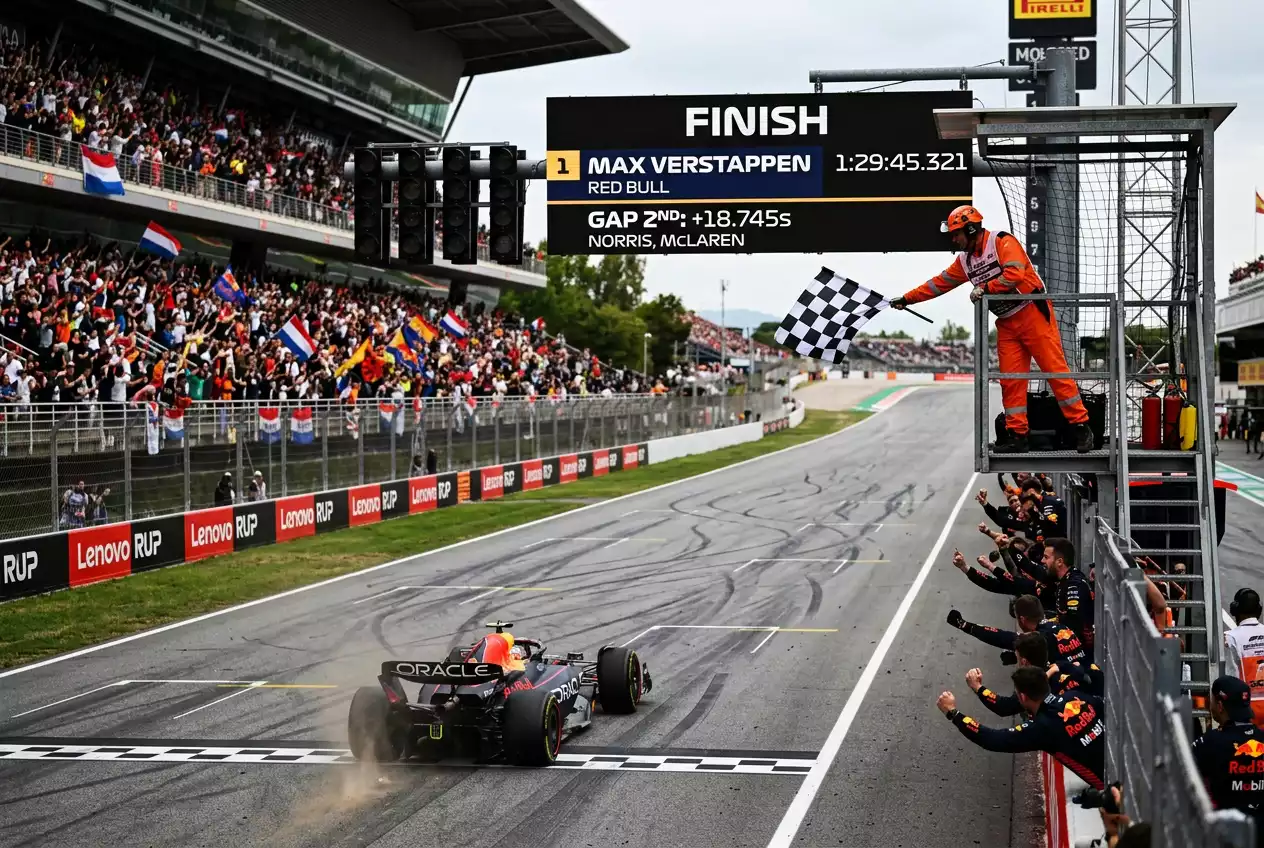
The Finish Line Gap Nobody Watches — Until They Bet on It
Abu Dhabi 2023. The race winner crossed the line twelve seconds ahead of the second-place driver. The winning margin market had been set at “over/under 5.5 seconds,” and I had taken the over at 2.10. It was one of the easiest bets of the season — the dominant car had been pulling away at a second a lap in the opening stint, and the gap was never going to close. Yet the majority of the betting public had played the race winner market, where the favourite was priced at odds too short to offer any value. The winning margin was where the edge lived that weekend.
Winning margin betting asks you to predict not who wins, but by how much. The market typically offers an over/under line – “Will the winning gap be over or under X seconds?” – or brackets such as “0-5 seconds,” “5-10 seconds,” “10+ seconds” and “photo finish (under 1 second).” It is a market that rewards understanding of relative pace, race dynamics and the strategic behaviour of teams once the result is effectively decided.
What Determines the Gap Between First and Second
Have you ever noticed how some races finish with a twenty-second gap while others end with the winner just a car length ahead? The difference is not random. The winning margin is a product of three measurable factors: the pace advantage of the winning car, the strategic situation in the closing laps, and whether any disruptive events — safety cars, rain, mechanical issues — compress or expand the field.
Pace advantage is the foundation. If the fastest car is 0.3 seconds per lap quicker than the second-fastest over a fifty-seven-lap race, the raw pace gap accumulates to roughly seventeen seconds. But raw pace rarely translates directly to the finishing margin because teams manage the gap. A dominant leader who has built a ten-second cushion will ease off to manage tyres and engine wear rather than extending the lead further. The gap stabilises at the “management window” – the margin the team considers safe enough to coast without risk of being caught. Understanding each team’s management style tells you where the winning margin is likely to settle.
F1 accounts for just 0.4 per cent of the global betting handle despite an audience of 827 million. Part of the reason is that casual bettors think of F1 as unpredictable — but winning margins follow patterns that informed bettors can exploit. Dominant eras produce large margins because one car is structurally faster. Competitive eras produce tight margins because the pace differences are small. The 2026 regulation changes are expected to shuffle the competitive order, which historically produces larger winning margins in the first season of new rules as one team gets the regulations right before the others catch up.
Safety Cars and Their Compression Effect
Nothing erases a winning margin like a safety car. A fifteen-second gap becomes zero in the space of two laps as the field bunches behind the safety car. If the safety car appears in the final third of the race, the margin at the chequered flag will almost certainly be under five seconds, because the leader has insufficient laps remaining to rebuild the gap. If the safety car appears early, the leader has time to stretch away again, and the eventual margin may end up similar to what it would have been without the interruption.
This creates a clear betting framework. At circuits with high historical safety car rates — Singapore, Monaco, Jeddah, Baku — the “under” on winning margin is structurally favoured because the probability of a late-race compression event is elevated. At circuits with low safety car rates — Barcelona, Lusail, Abu Dhabi in dry conditions — the “over” is favoured because the race is more likely to unfold without disruption, allowing pace advantages to compound into large gaps.
Betway became F1’s first Official Betting Operator in March 2026, and the maturation of F1’s betting product is driving the creation of more granular markets — including winning margin brackets that were rare a few years ago. As these markets deepen, the analytical edge for bettors who track safety car rates, pace differentials and management behaviour will only grow.
Reading Practice Data for Margin Predictions
The winning margin market is best informed by the gap between the fastest and second-fastest teams in long-run practice data. If FP2 long runs show the leading team averaging 0.4 seconds per lap faster than the nearest rival on equivalent compounds, the expected raw pace margin over a race distance is substantial — potentially fifteen to twenty seconds before management effects reduce it.
I apply a management discount of roughly forty to fifty per cent to the raw pace gap. A team with a twenty-second raw advantage will typically win by ten to twelve seconds, because the final stint involves tyre conservation and engine mode reductions. A team with a five-second raw advantage will typically win by two to four seconds, because the management window is tighter — they cannot afford to coast as much. This heuristic is imperfect, but over a season it calibrates the over/under decision with reasonable accuracy.
The second input is the probability of a late safety car. I assign each circuit a safety car probability based on historical data and adjust the margin estimate downward for high-probability circuits. If the raw pace suggests a twelve-second margin but the circuit has a fifty per cent chance of a late safety car, the expected margin drops to something like six to seven seconds — right around the typical over/under line, which means the bet becomes a coin flip and should be avoided. The retirement and safety car data directly feeds the winning margin calculation.
Bracket Markets and Photo Finish Value
Some operators offer winning margin in brackets rather than a simple over/under. Typical brackets are 0-1 seconds, 1-5 seconds, 5-15 seconds and 15+ seconds. The bracket structure allows you to express a more specific view and capture higher odds.
The 0-1 second bracket — sometimes called the “photo finish” – is one of the most volatile and entertaining bets in F1. Close finishes happen when two competitive cars are battling for the lead in the final laps, often after a safety car restart compresses the field. The photo finish bracket typically pays between 5/1 and 10/1, depending on the race. At circuits where late safety cars are common and the top two cars are closely matched, the photo finish probability climbs to fifteen or twenty per cent — offering genuine value at the quoted odds.
The 15+ second bracket is the other end of the spectrum. This pays when one car dominates without interruption. It is most likely at circuits where the leading team’s car suits the layout perfectly and the safety car rate is low. During dominant seasons — where one team has a clear half-second-per-lap advantage — the 15+ bracket can be underpriced at 3/1 or 4/1, offering a high-confidence bet with a decent return.
The middle brackets — 1-5 and 5-15 seconds — are where the market is most efficient and the edge is smallest. Most winning margins fall in the 1-15 second range, so the bookmaker can price these brackets with more precision. I tend to avoid these unless I have a very specific view on the margin that the data strongly supports. The edges are at the extremes: photo finishes after late disruption, or dominant blowouts at low-disruption circuits.
Winning Margin as a Season-Long Pattern
Track the winning margin at every race across a season, and a pattern emerges. Early-season margins tend to be larger because the competitive order has not yet converged. As the season progresses and teams bring upgrades, the gaps narrow and winning margins tighten. By the final quarter of the season, the average margin is typically two to four seconds shorter than the opening quarter.
This seasonal pattern gives you a structural edge in the over/under market. Early in the season, the “over” carries more value because the market uses a season-average line that does not account for the wider early-season gaps. Late in the season, the “under” becomes more attractive because convergence has tightened the field but the market line has not dropped proportionally. The adjustment is small — perhaps half a second to a second — but on a market line of 5.5 seconds, that half-second shift can flip the expected value from one side to the other.
