
 Available in US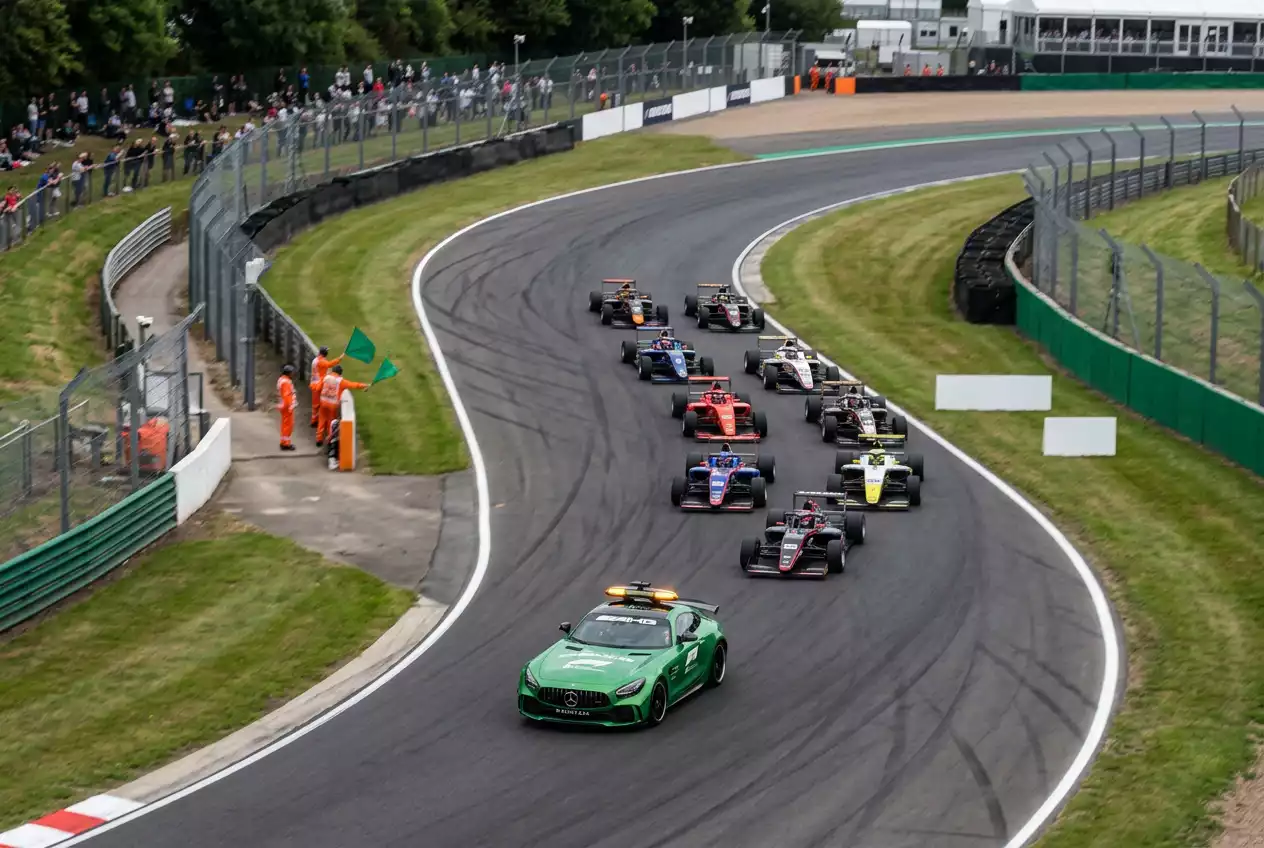
The Moment Every Live Bettor Waits For
Monza 2020. The leader had built a twenty-second gap, the odds had compressed to 1.05, and anyone who had backed him pre-race was counting their winnings. Then a safety car appeared. A backmarker had stopped on track, the pit lane opened, and the entire field was reshuffled by strategy calls made under pressure in a matter of seconds. The pre-race favourite finished outside the points. A driver priced at 150/1 before the start won the race. I was watching live, had backed an each-way outsider, and the safety car turned a speculative position into the biggest single-race return of my career.
Safety cars are the single most disruptive variable in F1 betting. They erase gaps that took twenty or thirty laps to build, compress the field into a train of cars separated by fractions of a second, and create a free pit-stop window that reshuffles the strategic order. For live bettors, a safety car is not a nuisance — it is the highest-value event in any grand prix.
How Safety Car Deployments Affect Race Outcomes
The mechanics are straightforward, but the consequences are layered. When the safety car is deployed, all cars slow to a controlled pace and the gaps between them close. No overtaking is allowed under safety car conditions. The pit lane remains open (unless race control closes it), and the time lost by pitting is dramatically reduced because the entire field is crawling. A pit stop that would normally cost twenty-two seconds of track position might cost only eight or nine under a safety car, because the field is travelling so slowly.
This creates an immediate strategic decision for every team on the grid. Do you pit for fresh tyres and accept a temporary position loss, gambling that the fresh rubber will pay dividends after the restart? Or do you stay out, maintain track position, and hope your older tyres hold on for the remaining laps? Teams make this decision in real time, with imperfect information, under enormous pressure — and they get it wrong regularly. Those errors are where live-betting value concentrates.
Twenty-eight per cent of F1 fans placed an online sports bet in the past twelve months, the highest engagement rate across all major sports. A significant portion of that money flows through live markets, and safety cars are the moments when live odds move fastest. The driver who was cruising in third on worn tyres suddenly has fresh rubber after a free stop. The leader who stayed out is now defending on twenty-lap-old compounds against rivals on brand-new softs. The entire competitive picture redraws in the space of two laps.
Safety Car Probability by Circuit Type
Not all circuits carry equal safety car risk, and understanding the baseline probability is critical for pre-race positioning. Street circuits — Monaco, Singapore, Jeddah, Baku — have the highest safety car rates. Barriers line the track, run-off is minimal, and small driver errors produce debris and stricken cars that require a safety car to clear. Over the past five seasons, street circuits have averaged roughly 1.4 safety car deployments per race.
Purpose-built circuits with generous run-off areas — Abu Dhabi, Paul Ricard, the redesigned Bahrain outer loop — produce fewer safety cars because drivers can rejoin after errors without blocking the track. The average at these circuits drops to around 0.6 per race. Circuits with a mix of high-speed sections and barrier-lined areas — Spa, Montreal, Suzuka — sit in the middle.
For pre-race bets, the safety car market itself is worth attention. Most operators offer a simple yes/no on whether a safety car will be deployed during the race. If your data shows a seventy per cent historical frequency at a particular street circuit but the “yes” price implies only sixty per cent, that is a small but consistent edge. Over a full season, these micro-edges accumulate into meaningful returns. The global fan base of 827 million generates enough liquidity in these niche markets to make them tradeable, even if they feel like sideshows compared to the race winner headline.
Live Betting Strategies Under the Safety Car
When the safety car boards appear, I follow a three-step process that has served me well across hundreds of race neutralisations.
Step one: identify who pits and who stays out. This information appears on the live timing screen within thirty seconds of the pit lane opening. Drivers who pit will rejoin in lower positions but on fresher tyres. Drivers who stay out retain position but face a tyre deficit at the restart. The market reacts to the position change instantly — the leader who stayed out sees their odds shorten because they still lead. But the market underprices the tyre-disadvantage factor. The real probability shift is larger than the initial odds movement suggests, which means the driver on fresh rubber is often underpriced in the seconds after the pit stops are confirmed.
Step two: assess the remaining race distance. A safety car on lap five of a sixty-lap race has a different impact than one on lap fifty. Early safety cars benefit the field broadly and reset the strategic picture without a clear directional signal. Late safety cars — in the final fifteen laps — are where the sharpest value sits, because there is less time for the natural order to reassert itself. A driver on fresh tyres with ten laps remaining is a genuine threat to the leader on old rubber, and the live in-play odds often lag behind this reality by one or two laps.
Step three: watch the restart. The first two laps after a safety car restart are the most volatile in any race. Drivers on cold tyres make mistakes. The concertina effect catches out mid-field runners. Positions change in a chaotic burst that the market prices in only after it has happened. If you have a view on which driver will gain positions at the restart — typically the one on the warmest tyres and with the most aggressive driving style — the window to act is during the final lap under the safety car, before the green flag drops.
Virtual Safety Cars: A Different Betting Dynamic
The Virtual Safety Car is a more contained neutralisation that slows the field without bunching it. Drivers must adhere to a delta time on each mini-sector of the circuit, maintaining their gaps relative to the car ahead. The VSC closes gaps less than a full safety car, and the pit-stop time saving is smaller — typically five to eight seconds rather than twelve to fifteen.
For bettors, the VSC is a subtler event. The odds shift is smaller, but the strategic implications can still be significant. A VSC-period pit stop is a discount pit stop, and teams that react quickly — stopping their driver within two or three laps of the VSC deployment — gain a small but real advantage. The market barely reacts to a VSC, which means the informed bettor who recognises a strategic pit stop under VSC conditions can find value that would not exist under a full safety car, where the market is hyper-alert.
One pattern I have tracked over multiple seasons: when a VSC occurs during the optimal pit window for the race leader, and the leader does not stop, their odds should lengthen because they have missed a free pit-stop opportunity that their rivals may have taken. In practice, the odds barely move because the VSC does not generate the same visual drama as a full safety car. That disconnect between the strategic significance and the market reaction is a repeatable edge for anyone paying attention to the timing screens rather than the broadcast.
