
 Available in US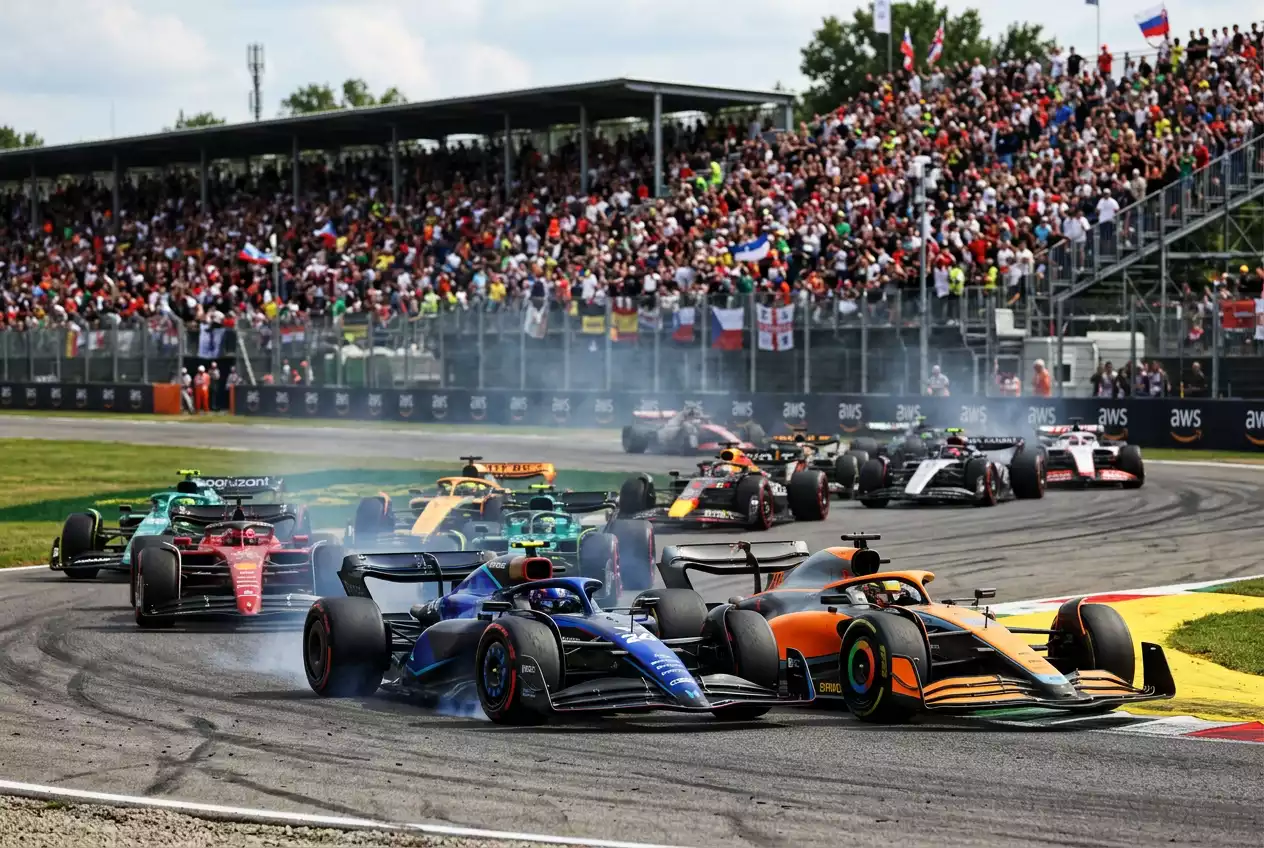
A Twenty-Minute Race With Its Own Betting Logic
The first time I bet on an F1 sprint, I treated it like a miniature grand prix. Backed the qualifying leader, assumed the usual strategic complexity, and lost. The sprint is not a small race — it is a fundamentally different event with its own dynamics, its own data inputs, and its own value patterns. Learning that distinction cost me a weekend’s profit. It has made me far more since.
F1 introduced sprints in 2021 and has expanded the format to six weekends per season. The sprint is roughly one hundred kilometres — about a third of a full race distance — with a separate qualifying session (sprint qualifying) setting the grid. No mandatory pit stops. Limited tyre strategy. The entire event compresses into twenty to twenty-five minutes of flat-out racing. For bettors, the sprint strips away the strategic layers that define a grand prix and replaces them with a purer test of car pace and starting position.
Sprint Format Mechanics for Bettors
Understanding exactly what the sprint is — and is not — matters for your betting decisions. Sprint qualifying takes place on Friday afternoon, setting the grid for Saturday’s sprint race. The main grand prix qualifying is a separate session on Saturday afternoon, setting the grid for Sunday’s race. The two events are independent. A driver can win the sprint and qualify poorly for the grand prix, or vice versa.
The sprint awards points on a reduced scale: eight points for first, down to one point for eighth. No bonus point for fastest lap. These points count toward both the Drivers’ and Constructors’ Championships, which means the sprint has genuine stakes — teams race hard, penalties have real consequences, and the market prices accordingly.
The critical difference from a full race: no mandatory pit stops. Most sprints are run on a single set of medium-compound tyres from start to finish. Without pit stops, there is no strategic undercut, no tyre-offset overtaking, and no free pit-stop windows under safety cars. Track position is even more dominant in the sprint than in a full race. The driver who leads into turn one after the start has an enormous advantage because there are fewer mechanisms to displace them.
Ninety per cent of surveyed F1 fans are emotionally invested in race outcomes. The sprint intensifies that investment by compressing the action into a burst that leaves no room for recovery — a bad start or a first-lap incident with three laps behind you is proportionally far more damaging than the same incident with fifty laps remaining.
Using Sprint Data to Bet on Sunday’s Race
Here is where the sprint’s real betting value lies — not in the sprint itself, but in what it reveals about Sunday. The sprint is the only competitive session where every driver runs in race conditions (full fuel, race tyres, wheel-to-wheel combat) before the grand prix. Friday practice gives you estimates; the sprint gives you live evidence.
I use three specific sprint data points for my Sunday bets. First, relative race pace. The gaps between drivers at the end of the sprint reflect genuine competitive differences in race trim. If Driver A finishes three seconds ahead of Driver B after twenty laps of racing, that gap is a much stronger signal than any practice-session delta. Second, tyre behaviour under racing conditions. A driver who was losing time in the final five laps of the sprint on medium tyres will face the same degradation issue on Sunday, amplified by a longer distance. Third, racecraft under pressure — who overtakes cleanly, who defends aggressively, who fades in dirty air.
The market adjusts Sunday’s odds after the sprint, but not always accurately. A sprint winner’s race-day odds shorten, but if the sprint was won by track position from pole rather than genuine pace advantage, the shortening may be overdone. Conversely, a driver who started eighth in the sprint, carved through the field to fourth, and showed the best sector times on track may be underpriced for Sunday because their sprint result looks unremarkable in the headline. The under-the-bonnet data tells a different story from the finishing positions, and that discrepancy is where I place my Sunday race bets on sprint weekends.
Sprint-Specific Market Opportunities
The sprint generates its own set of markets: sprint winner, sprint podium, sprint head-to-head, and sprint fastest lap. These markets are typically less liquid than grand prix markets, which means the odds can be less efficiently priced — a classic condition for finding value.
Sprint winner is heavily correlated with sprint qualifying position. Without pit stops and with a short race distance, the pole sitter dominates even more than in a full race. If you believe a specific driver will top sprint qualifying, the sprint winner market at the combined probability is often more attractive than two separate bets on sprint pole and sprint win.
Sprint head-to-head markets are where I find the most consistent value. The absence of pit strategy removes a major source of variance, which makes the relative pace between two drivers a stronger predictor of the outcome. If your qualifying-pace data says Driver A is two tenths faster than Driver B, that advantage translates more directly to a sprint result than it does to a full race, because there are no strategic variables to dilute it.
The sprint fastest lap market behaves differently from the grand prix version. Without a late pit stop for fresh tyres, the fastest lap in a sprint tends to go to the driver with the best raw pace on race-fuel tyres in the opening laps, when the rubber is freshest. The fastest lap bonus point does not apply in sprints, so there is no strategic incentive for a late push. This shifts the fastest lap probability toward the front-runners who are running in clean air from the start, rather than the tactical late-stoppers who dominate the grand prix fastest lap market.
Risk Management on Sprint Weekends
Sprint weekends demand a different bankroll approach because they offer twice as many betting events — sprint qualifying, the sprint race, grand prix qualifying, and the grand prix itself. The temptation is to bet on everything. The discipline is to be selective.
I allocate my sprint-weekend budget in a 30/70 split: thirty per cent on sprint-related markets, seventy per cent on the grand prix. The sprint is a shorter, higher-variance event with less strategic complexity, which means my edge per bet is smaller. The grand prix, with its additional data from the sprint and Saturday qualifying, is where the information advantage is largest. Treating the sprint as an intelligence-gathering exercise that also happens to offer a few betting opportunities keeps my focus where the returns are highest.
One final caution: tyre allocations are shared across the entire weekend. Sets used in the sprint are not available for the grand prix. A team that uses their best soft tyres aggressively in sprint qualifying may be compromised in grand prix qualifying, which cascades into their Sunday grid position and race prospects. Tracking tyre usage across the weekend is more important on sprint weekends than any other, and it is information the market consistently underweights.
