
 Available in US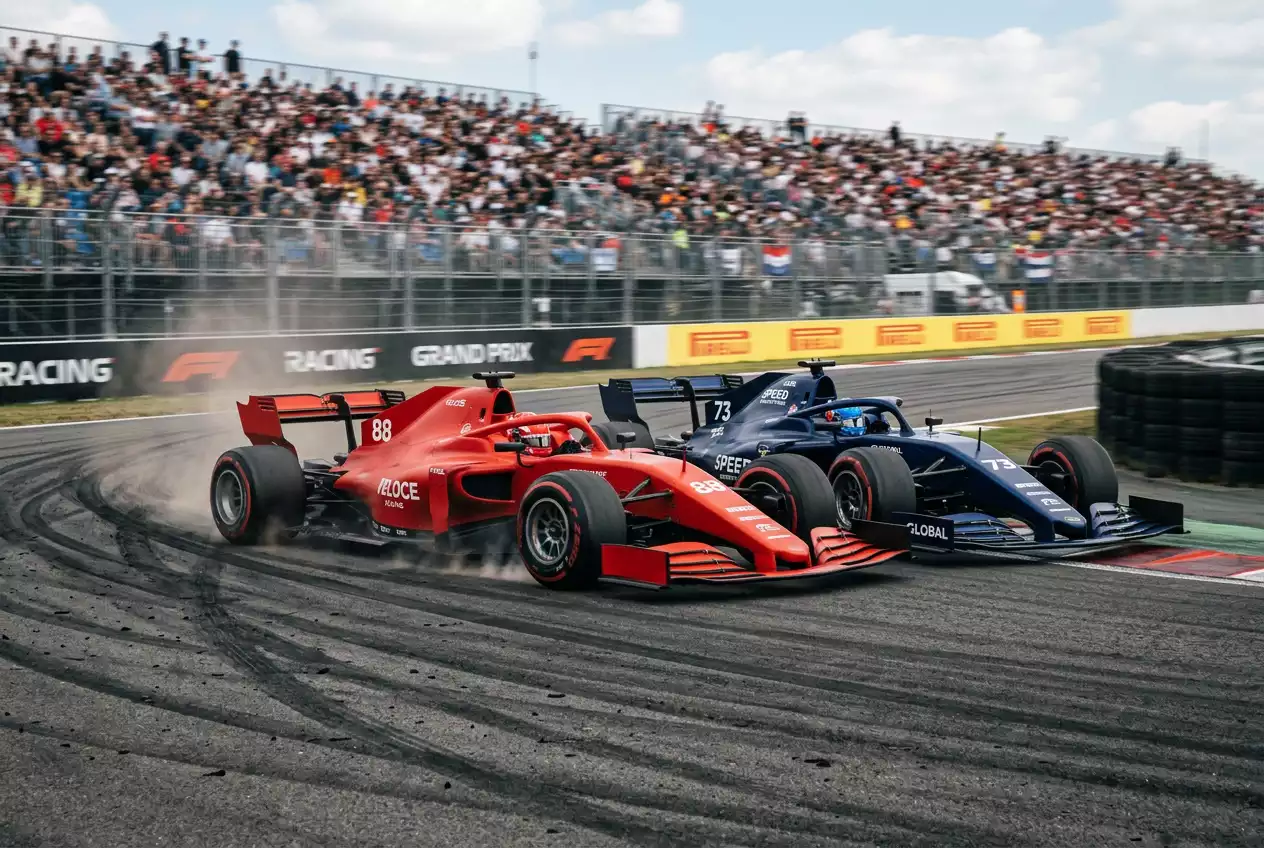
Why Head-to-Head Markets Reward Research
I once backed a driver at even money in a head-to-head against his teammate, purely because the practice data showed a consistent three-tenths deficit in the high-speed sector for the rival. That driver finished five places ahead on Sunday, and the bet landed without drama. No need to predict the winner. No need to forecast safety cars or weather. Just one question: which of these two drivers finishes ahead of the other?
Head-to-head markets strip F1 betting down to its simplest form — a binary contest between two named drivers. The bookmaker pairs them up, sets the odds, and you pick which one finishes in the higher position. If one driver retires, the other wins the head-to-head by default (though rules vary, so check the settlement terms). Only twenty-two per cent of F1 fans who bet on sports actually wagered on motorsport in the past twelve months, and I suspect a major reason is that race winner markets feel too unpredictable. Head-to-heads solve that problem by narrowing the question to a two-horse race within a twenty-driver field.
The research payoff here is direct. Every piece of data you gather about relative performance between two specific drivers feeds straight into your decision. No noise from the rest of the grid. No need to model the entire field. Just two drivers, one outcome.
Types of F1 Head-to-Head Bets
F1’s Head of Betting, Mark Wrigley, has made the point that everyone has their favourite drivers and that the battles worth watching are not always at the front. Head-to-head markets capture exactly that appeal — they let you bet on any rivalry in the field, not just the championship fight.
Teammate head-to-heads are the most common and the most analysable. Both drivers have the same car, the same strategy options and the same engineering resources. The variable is the driver, which makes this market the purest skill-on-skill contest in F1 betting. If one teammate consistently outqualifies the other by two tenths, that pattern tends to hold race after race — until a car upgrade changes the balance or one driver adapts to new conditions.
Cross-team matchups pair drivers from different constructors. These are harder to analyse because the cars are different. A driver in a slightly faster car has a structural advantage that has nothing to do with talent. Cross-team head-to-heads become most interesting when two cars are closely matched on pace — say, the fifth and sixth fastest constructors, where the gap is small enough that driver skill can swing the result. The trick is knowing when the cars are genuinely close and when one has a hidden advantage that the odds do not reflect.
Session-specific head-to-heads are a newer addition. Some operators offer qualifying head-to-heads (which driver qualifies higher?) and sprint head-to-heads alongside the main race matchup. These are particularly useful because qualifying and race performance can diverge significantly. A driver who is brilliant on a single low-fuel lap might struggle with tyre management over a full race distance, and vice versa.
Data Points for Picking H2H Winners
Ninety per cent of surveyed F1 fans say they are emotionally invested in race outcomes. Emotional investment is great for viewership, but it is the enemy of head-to-head betting. The driver you want to win and the driver the data says will finish ahead are often not the same. Here is how I separate signal from sentiment.
Qualifying delta is the starting point. Look at the average gap between the two drivers over the last four to six qualifying sessions. A consistent advantage of two tenths or more in qualifying translates strongly to race day, because grid position determines clean air, strategic options and the probability of avoiding first-lap incidents. If Driver A has outqualified Driver B in five of the last six races, that is not a streak — it is a structural edge.
Race pace versus qualifying pace adds a layer. Some drivers are qualifying specialists who lose time on Sunday through higher tyre degradation or worse racecraft in traffic. Others are poor qualifiers who come alive during the race. Check the average lap-time delta in race conditions (you can find this in post-race analysis from timing data sources) and compare it with the qualifying gap. If the qualifying gap is four tenths but the race pace gap narrows to one tenth, the “slower” qualifier might be the better head-to-head bet for the race — especially if grid position does not matter as much at that particular circuit.
Circuit-specific form is the third variable. F1 has high-speed tracks, low-speed street circuits, high-altitude circuits, tracks with heavy braking zones, and tracks dominated by long-duration corners. Some drivers excel at one type and struggle at another. Pull the head-to-head record at similar circuits, not just the overall season average. A driver who dominates at Monza and Spa might lose the teammate battle at Monaco and Singapore every year.
Finally, consider race-weekend context: upgrades, penalties and conditions. If one driver is running an upgraded floor and the other is not, the head-to-head odds should reflect that asymmetry. If one driver has a grid penalty for an engine change, the teammate head-to-head becomes heavily skewed. And if rain is expected, some drivers have a demonstrable wet-weather advantage that overrides their dry-condition form.
Teammate H2H vs Cross-Team Matchups
Teammate head-to-heads are where I spend most of my time. The equal-car assumption eliminates the biggest confounding variable in F1: machinery. You are left with a clean signal about driver ability, adaptation to setup and race management.
The pricing on teammate matchups is typically tighter — odds closer to even money — because bookmakers have access to the same qualifying and race data you do. The margin is slim but consistent. I find value in teammate head-to-heads most often when there is asymmetric information: one driver is adapting to a new team (early-season races after a team switch), one driver is carrying an injury that is not fully public, or the team has shifted development focus to suit one driver’s style over the other’s.
Cross-team matchups offer higher potential returns because the odds are wider, reflecting greater uncertainty. But that uncertainty is genuine — you are trying to assess relative driver ability while simultaneously estimating relative car performance, and those two variables interact in complex ways. A driver might be individually faster but lose the head-to-head because their team’s strategy is more conservative, or because their car is faster in qualifying but slower in the race.
My rule of thumb: use teammate head-to-heads as the bread-and-butter of your H2H strategy, and deploy cross-team matchups selectively when you have specific insight — for instance, when one team has brought a major upgrade to a circuit type that suits the other team’s car philosophy. Those situations create genuine mispricings that neither the bookmaker’s model nor the average bettor has fully absorbed.
One last practical note. Settlement rules for head-to-heads vary between operators when one or both drivers retire. Some void the bet. Some settle in favour of the driver who completed more laps. Some settle in favour of the driver who retired later. This is not a minor detail — retirements happen in roughly a quarter of F1 races. Read the settlement terms before placing the bet, because a head-to-head that you expected to win can be voided or reversed if the retirement rule catches you off guard.
