
 Available in US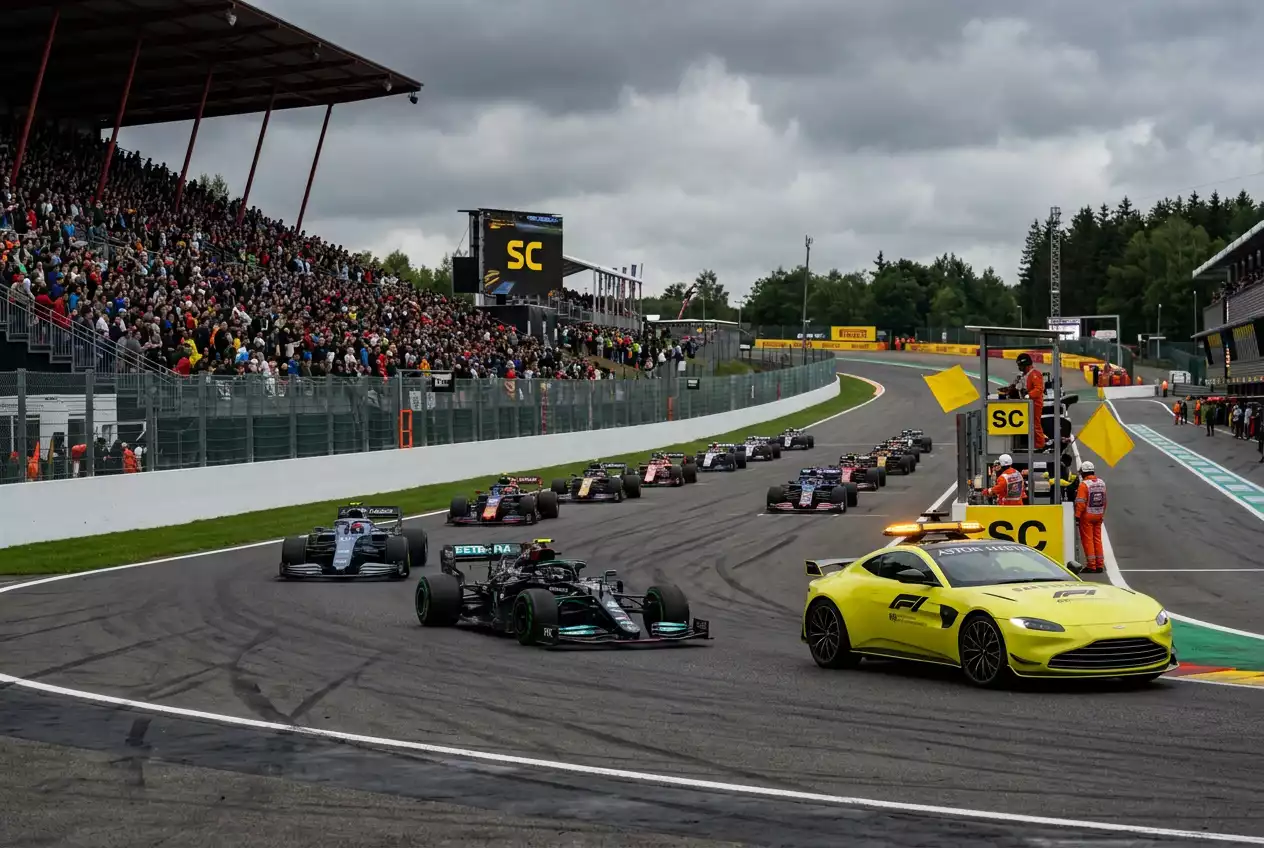
The Markets Hiding in Plain Sight
A few seasons back, I found a market asking whether any driver would serve a penalty during the race. The odds implied a thirty-five per cent chance. My own data — tracking penalty frequency across the previous three seasons — showed penalties in sixty per cent of races. I backed “yes” at every race for the rest of the year and finished with a tidy season-long profit from a market that most serious bettors considered a joke. Prop bets are where bookmakers pay the least attention and where patient punters can build consistent returns.
Proposition bets — props — cover everything outside the standard race winner, podium and qualifying markets. They ask specific questions about what will happen during a race weekend: will there be a safety car, how many drivers will finish, will the race end under a safety car, will there be a formation-lap incident, which driver will lead the most laps, and dozens more. The range varies by operator, but the principle is constant: props target micro-events within a grand prix, and because these markets attract lower volume, the pricing is often less efficient than the headline markets.
Types of F1 Prop Bets Available
The prop bet landscape in F1 breaks into three broad categories. Performance props ask about specific driver or team achievements: will a driver finish in the points, which driver will lead the most laps, will a driver set the fastest lap from outside the top five, will both drivers from a team finish in the top ten. These are researchable — practice data, historical form, and circuit characteristics all inform the probabilities.
Event props target race-level outcomes that are independent of any single driver: total classified finishers (over/under), safety car appearance, red flag, race finishing under green flag conditions, total pit stops by all drivers combined. These require a different analytical approach — circuit history, weather forecasts, and aggregate field behaviour rather than individual driver analysis.
Novelty props are the most creative and the hardest to price: will a driver retire on the formation lap, will there be a penalty in the first five laps, will the winning margin be under five seconds, will the constructor that wins qualifying also win the race. These markets are priced partly on historical frequency and partly on the bookmaker’s intuition, which means they are the most likely to contain mispricings.
The sport’s 0.4 per cent share of the global betting handle, despite an 827-million fan base, means F1 prop markets are thinly traded compared to football or horse racing equivalents. Thin liquidity is a double-edged sword: the odds can be generous, but the maximum stakes are often lower, and lines can move sharply after even a small volume of bets.
How to Analyse Props Systematically
Most bettors treat props as entertainment — a bit of fun alongside their serious race-day positions. That is precisely why they offer value. The bettor who approaches props with the same analytical rigour they apply to the race winner market has an information edge over both the bookmaker (who devotes less pricing attention to props) and the recreational punter (who bets props on gut feeling).
My process for any prop bet starts with base-rate analysis. What is the historical frequency of this event across the past three to five seasons? If the prop asks “will there be a safety car at Monza?” I pull the safety car data for the last ten Monza races and calculate the frequency. If safety cars appeared in six of ten, the base rate is sixty per cent. If the market prices “yes” at odds implying fifty per cent, I have a ten-percentage-point edge. Simple, boring, and profitable over a full calendar.
Adjustments come next. The base rate is the starting point, not the final answer. Current-season conditions modify the probability: is the weather forecast unusual, have the regulations changed in a way that increases or decreases incident frequency, is the field closer or more spread out than in previous years? Each adjustment nudges the probability up or down from the base rate. If the adjustments are small and the base-rate edge is clear, I bet. If the adjustments are large or uncertain, I skip the prop and move on.
The critical discipline: never bet a prop without a quantified view. “I reckon there will be a safety car” is not a betting thesis. “The base rate for safety cars at this circuit is sixty-two per cent, the weather forecast increases incident probability, and the market implies fifty per cent” is a thesis. The first is a hunch. The second is a position with a defined edge.
Classified Finishers and Retirement Markets
The total classified finishers market — over/under a specified number of drivers completing the race — is one of the most reliable prop bets across a season. F1 fields typically see between sixteen and nineteen classified finishers per race, with the number varying by circuit type and weather conditions.
Street circuits produce fewer classified finishers because barrier impacts cause more retirements. Wet races reduce the number further. High-altitude circuits (Mexico City, with its thin air that stresses engines) have historically produced more mechanical retirements. The over/under line is usually set at seventeen or seventeen and a half, and the edges come from knowing which direction to push based on circuit-specific and condition-specific factors.
Individual driver retirement props — “will Driver X finish the race?” — are harder to price because individual reliability is less predictable than field-level aggregate reliability. However, when a driver is carrying a grid penalty for a new engine (suggesting their old unit was failing), or when a team has suffered multiple mechanical retirements in recent races, the “no” price on their finishing prop can carry genuine value.
Building a Season-Long Prop Strategy
Props reward consistency, not heroics. My approach is to identify three to five prop markets where I have a quantified edge and bet them repeatedly across the season. Safety car yes/no, total classified finishers over/under, and “will the pole sitter win the race?” are my three staples. Each one has a well-documented base rate, is available at most operators, and offers enough races per season to generate a meaningful sample.
Over a twenty-four-race season, placing two or three prop bets per race weekend generates fifty to seventy-five individual bets. At a consistent two per cent edge per bet, the expected profit is modest on each individual wager but accumulates to a material season total. The variance is lower than in race winner or podium markets because the outcomes are more frequent and the probabilities are closer to even money. A prop portfolio is the ballast in a betting season — it does not produce spectacular wins, but it generates steady returns that offset the higher-variance swings in your main markets.
A third of F1 fans under thirty-five say they are more likely to watch a race with money on the outcome. Prop bets are the perfect entry point for that engagement: low stakes, clear outcomes, and a reason to care about events within the race that the broadcast does not always highlight. Whether there will be a safety car, how many drivers will finish, or whether the fastest lap comes from outside the podium — these questions keep your attention on the data and your money working through every phase of the grand prix.
