
 Available in US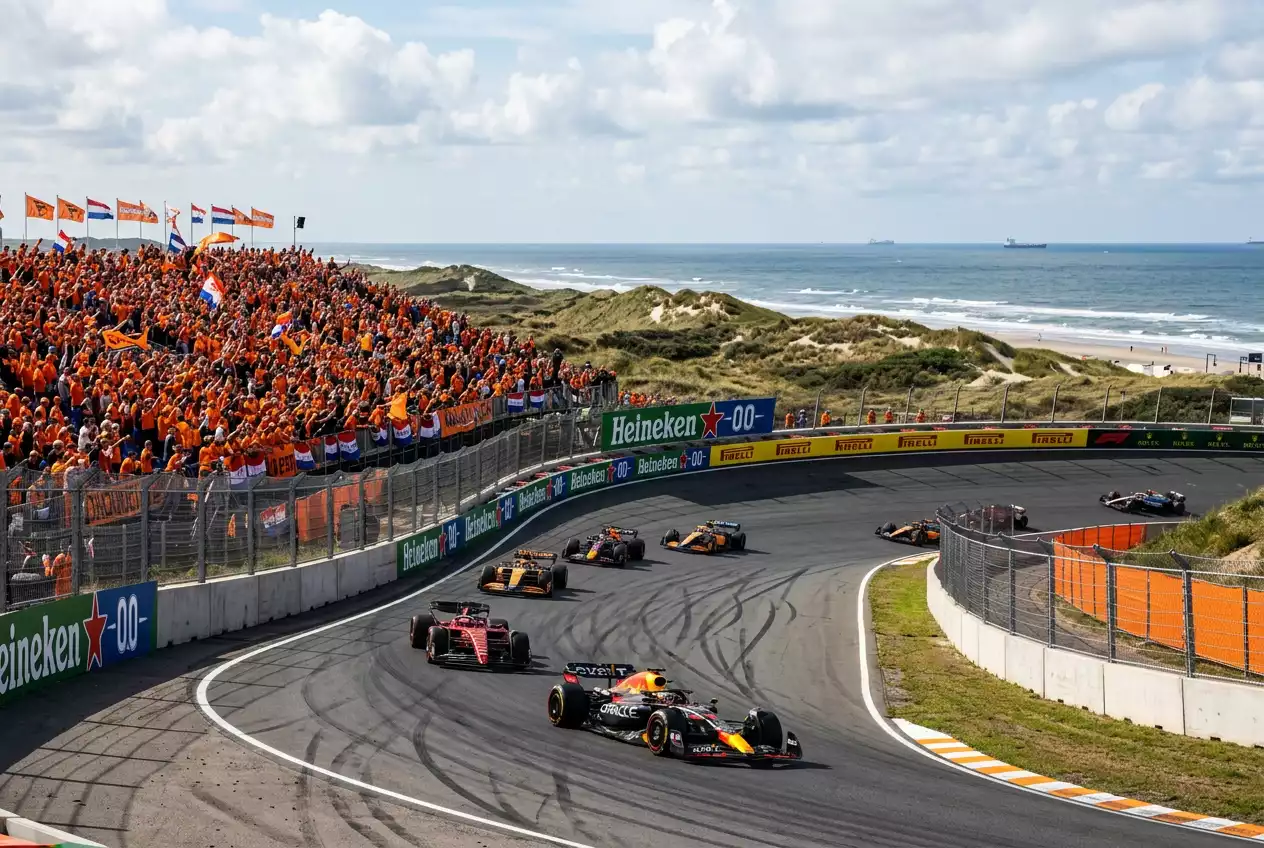
Zandvoort’s Return and What It Means for Bettors
The first time I bet on the Dutch Grand Prix after its return to the calendar, I treated it like any other European race — checked the practice data, assessed the form, placed my selections. I lost. What I had not accounted for was the banked corners, the narrow overtaking windows and the crowd-driven atmosphere that seemed to add an extra tenth to the home favourite’s qualifying lap. Zandvoort is not a standard circuit, and betting on it requires adjustments that most form-based models miss.
Zandvoort returned to the F1 calendar in 2021 after a thirty-six-year absence, redesigned with two banked corners that are unique in modern F1. The banking at Turn 3 and the final corner changes the car’s behaviour — lateral forces combine with the camber to produce grip levels that drivers experience nowhere else. Teams that understand how to set up for banked corners gain an advantage that is invisible in the data from flat circuits. The first two seasons back at Zandvoort produced dominant performances from the home favourite, but as the field adapted and the novelty faded, the competitive picture tightened — and the betting value shifted with it.
Banked Corners and Their Effect on Car Setup
Why do banked corners matter for betting? The banking at Zandvoort changes the effective downforce loading on the car. On a flat corner, the car’s downforce must resist the entire centripetal force trying to push the car off the track. On a banked corner, the track surface itself provides some of that resistance, which means teams can run lower downforce levels through the banked sections without losing grip. But the rest of the circuit is conventional, which creates a setup dilemma: optimise for the banked corners and compromise elsewhere, or set up for the flat sections and accept less performance through the banks.
Teams that solve this compromise best gain a structural advantage that translates to both qualifying and race pace. From a betting perspective, track historical data from previous Zandvoort races — looking at which teams overperformed relative to their season average — reveals which constructors have cracked the banking setup. If a team finished three positions higher at Zandvoort than their average finishing position across the rest of the season, that is a signal worth weighting heavily in your pre-race analysis.
The banking also affects tyre degradation. The combined forces through banked corners stress the tyre differently from flat corners, creating wear patterns that Pirelli’s standard compound models do not perfectly predict. In practice sessions, watch for teams struggling with unusual tyre graining or blistering through the banked sections — that is a setup miscalculation that will cost them in the race.
Overtaking Difficulty and Qualifying Importance
Zandvoort shares a characteristic with Monaco and Hungary: overtaking is extremely difficult during the race. The circuit is narrow, with minimal straight-line sections where DRS can produce a decisive speed advantage. The main overtaking opportunity comes at Turn 1, a tight right-hander at the end of a short start-finish straight, but even there the braking zone is compressed and the corner entry is narrow enough to defend.
This limited overtaking tilts the betting equation toward qualifying markets. At Zandvoort, the pole-to-win conversion rate is above sixty per cent across recent editions, similar to Monaco. A driver who qualifies on the front row has a commanding advantage because the lack of overtaking opportunities protects their position. For bettors, this means qualifying head-to-heads and pole position markets offer sharper value than race winner markets — you are betting on a shorter, more predictable event.
Thirty-three per cent of F1 fans under thirty-five say they engage more with a race when they have a financial stake. At Zandvoort, that engagement is front-loaded into Saturday, where the qualifying battle determines the Sunday outcome with an efficiency that the market does not always price correctly.
Home Crowd Effect and the Bias to Watch For
The Dutch Grand Prix crowd is among the most vocal and partisan on the calendar. When the home favourite is on track, the orange-clad stands create an atmosphere that visibly energises the driver and the team. Does this translate into a quantifiable performance boost? My data says yes, but not in the way most people assume.
The home crowd effect at Zandvoort appears primarily in qualifying. The home favourite has consistently extracted a qualifying performance at this circuit that exceeds their average gap to teammates and rivals at other venues. Whether this is genuine inspiration, extra focus or simply familiarity with a circuit driven hundreds of times before reaching F1, the result is the same: the home driver outperforms their expected qualifying position by one to two grid slots on average.
The betting trap is overweighting this effect. Bookmakers are fully aware of the home crowd factor, and the home favourite’s odds at Zandvoort are compressed accordingly. The value is not in backing the home driver at short prices — it is in recognising when the crowd effect is already fully priced in and looking elsewhere. If the home driver is priced at 1.60 to win but the qualifying data suggests their true edge is only marginally better than a 1.80 probability, the market has overpriced the home advantage, and opposing selections offer better expected value.
Equally, the crowd effect creates opportunities in the head-to-head market. If the home driver’s teammate is a strong qualifier in their own right but the market has priced the teammate as a heavy underdog at Zandvoort because of the assumed crowd boost, backing the teammate at inflated odds can be a shrewd contrarian play — especially if the teammate has shown strong form at comparable circuits earlier in the season.
Strategic Considerations Unique to Zandvoort
The undercut is king at Zandvoort. Because overtaking on track is so difficult, the primary method of gaining positions is through pit-stop strategy — pitting before your rival to gain time on fresh tyres while they are still on worn rubber, and emerging ahead when they eventually stop. The undercut window at Zandvoort is typically two to three laps, and teams that execute it precisely can gain positions that would be impossible to achieve through racing alone.
For live bettors, this creates a clear pattern: when a driver in the chasing pack pits unexpectedly early, the odds on the driver immediately ahead should shift — but they often do not adjust quickly enough. The market lags the strategic implication of an early stop by thirty to sixty seconds, which is enough time to act. Track the pit-stop delta (the time difference between the undercut driver’s out-lap and the leader’s current pace) during the race, and bet when the delta favours the undercutter.
Weather at Zandvoort adds a final variable. The circuit sits on the North Sea coast, exposed to maritime weather systems that bring sudden showers and gusty crosswinds. A sea breeze shifting direction between qualifying and the race can change the car’s balance through the banked corners, producing a different competitive order on Sunday from Saturday. Coastal weather monitoring — wind direction, sea-surface temperature, approaching fronts — gives bettors an edge that the inland-focused general forecasts miss entirely.
