
 Available in US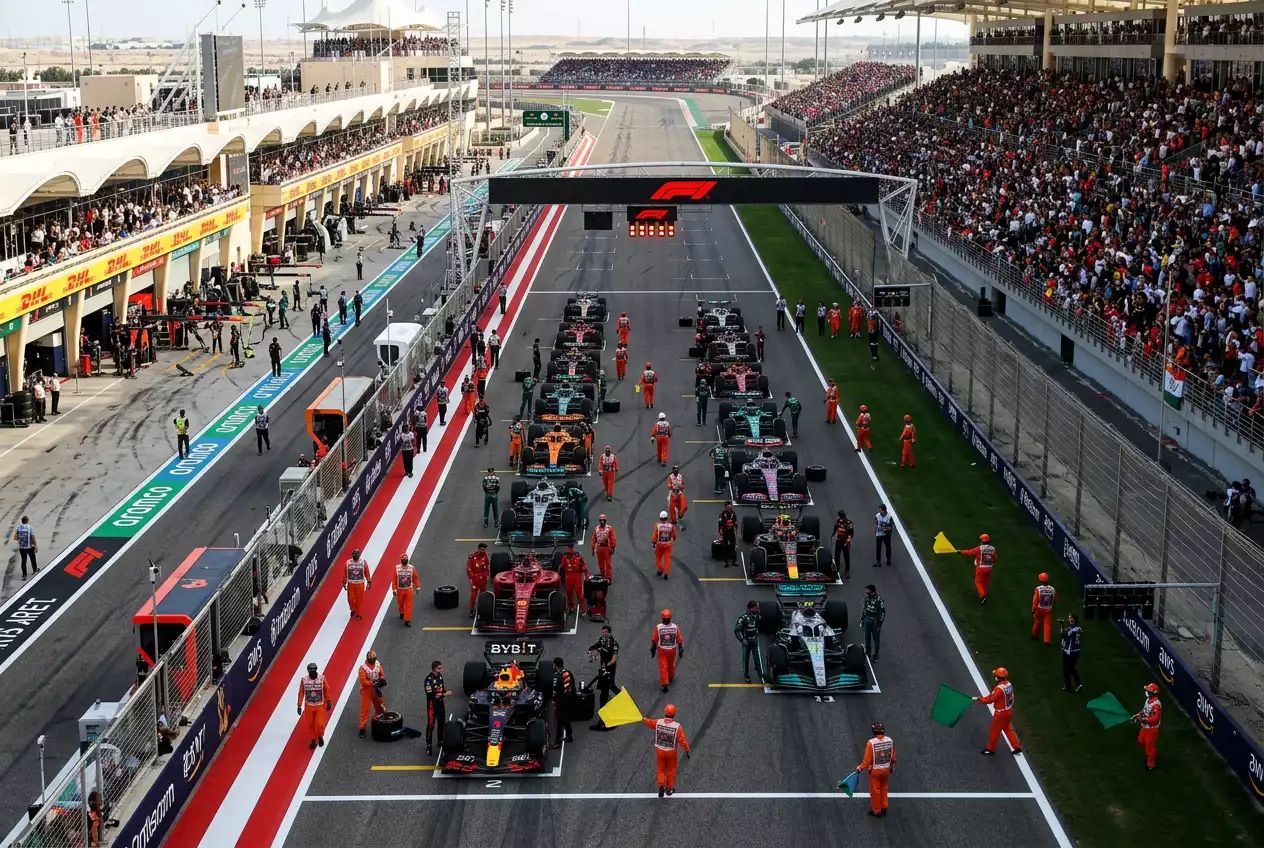
When the Grid Lies About the Race
Spa 2022. A championship contender took a raft of power unit penalties and started from the back of the grid. By lap fifteen, he was in the top five. By the chequered flag, he was on the podium. His pre-race odds had drifted to 8/1 because the market saw “starting last” and priced accordingly. But anyone who understood grid penalties, recovery rates and Spa’s overtaking characteristics would have recognised that 8/1 was a gift. I took it. It paid.
Grid penalties are a structural feature of modern F1 that the betting market handles clumsily. When a team installs new power unit components or gearbox elements beyond their seasonal allocation, the driver receives a grid penalty — five, ten, fifteen or twenty places dropped from their qualifying position, sometimes more. The penalty drops the driver down the grid, but it does not change the car’s pace. A car that qualified third-fastest is still third-fastest when it starts fifteenth. The gap between grid position and true pace is the betting opportunity.
Types of Grid Penalties and Their Severity
F1 grid penalties come in several flavours, and understanding the specifics matters for accurate odds assessment. Engine-related penalties are the most common: each driver is allocated a limited number of power unit components per season, and exceeding the allocation triggers a grid drop. A single new internal combustion engine incurs a ten-place penalty. A complete power unit change — engine, turbo, MGU-H, MGU-K, energy store and control electronics — pushes the penalty beyond the maximum grid drop, effectively sending the driver to the back regardless of qualifying position.
Gearbox penalties work differently. An unscheduled gearbox change triggers a five-place grid drop. Reprimand-based penalties from stewards — for impeding during qualifying, unsafe pit releases, or other infractions — vary from three to ten places. Stewards can also assign pitlane starts for particularly severe offences, which is worse than any numerical grid drop because the driver starts from the pit lane after the field has left the grid.
The critical distinction for bettors: a ten-place penalty on a driver who qualified second means they start twelfth. A ten-place penalty on a driver who qualified tenth means they start twentieth. The same penalty has vastly different impacts depending on the baseline qualifying position. A title contender dropping from second to twelfth has enormous recovery potential because they are faster than everything around them. A mid-grid driver dropping from tenth to twentieth faces a much harder task because the cars immediately ahead of them on the grid are of similar pace.
Recovery Rates: How Quickly Penalised Drivers Climb Back
Twenty-eight per cent of F1 fans placed a bet in the past year, yet most of them treat grid penalties as a straightforward negative — the driver is further back, so they are less likely to win. That surface-level analysis misses the recovery data entirely.
Over the past five seasons, I have tracked the average position gain for penalised front-running drivers at every circuit. The results are striking. At high-overtaking circuits — Spa, Monza, Bahrain, Las Vegas — a top-three-pace driver starting fifteenth or lower typically recovers to the top five within twenty laps and finishes on or near the podium. At low-overtaking circuits — Monaco, Hungary, Zandvoort — the same driver starting fifteenth might recover only to eighth or ninth, because there is no physical space to pass slower cars.
The betting market accounts for this to some degree, but inconsistently. A penalised driver’s odds lengthen at every circuit when the penalty is announced, but the degree of lengthening rarely reflects the circuit-specific recovery rate. At Spa, a penalised favourite’s odds might drift from 2/1 to 5/1 — but the recovery data suggests they should be closer to 3/1. That gap is the value. At Monaco, the same drift might be from 2/1 to 5/1 as well, but the recovery data supports 7/1 or longer. The market applies a generic penalty discount rather than a circuit-specific one, and that generic approach leaves money on the table at circuits where recovery is easy and burns money at circuits where it is not.
Strategic Penalty Taking and What It Signals
Teams do not take grid penalties randomly. They choose the circuit, and the timing within the season, based on strategic calculations that carry useful information for bettors. A team taking an engine penalty at Spa is signalling several things simultaneously: they believe their car’s pace will allow recovery through the field, they want fresh components for the remainder of the season, and they are confident that the points lost to the penalty will be more than compensated by improved reliability and performance in subsequent races.
When a championship contender takes a penalty at a circuit where recovery is historically difficult, that is a warning sign. It often means they have no choice — the component is failing and must be replaced to avoid a retirement that would cost more points than the penalty. Forced penalties at tough circuits are a bearish signal for the driver’s race outcome and should push you toward opposing them in head-to-head and podium markets.
Conversely, when multiple teams schedule penalties for the same race — which happens surprisingly often at Spa and Monza — the grid becomes chaotic in ways that benefit all the penalised drivers simultaneously. If five drivers take engine penalties, they all start near the back but their combined pace means they will be fighting each other rather than stuck behind slower cars. The mid-grid becomes a highway for fast cars working their way forward, and the podium finish market should reflect the increased probability of a penalised driver reaching the top three.
Timing Your Bets Around Penalty Announcements
Grid penalties are typically announced on Thursday or Friday of a race weekend, though teams sometimes delay the formal announcement until the car is assembled with new components. The key window for bettors is the thirty to sixty minutes after the penalty is officially confirmed, when the odds adjust but have not yet settled at their new equilibrium.
The market’s initial reaction to a penalty announcement almost always overshoots. The favourite’s odds lengthen too much because recreational bettors see “grid penalty” and hit the panic button. Sharp bettors recognise this overreaction and back the penalised driver at the inflated price, which gradually brings the odds back toward fair value over the next twelve to twenty-four hours. If you can place your bet within the first hour after the announcement — before the correction begins — you are capturing the maximum overreaction premium.
My process is straightforward: maintain a watchlist of which drivers are approaching their component allocations, flag the circuits where recovery rates are highest, and pre-calculate the fair odds for each scenario. When the penalty lands, I compare the market price to my pre-calculated fair value. If the gap is large enough, I bet. If the market has already adjusted efficiently — which does happen occasionally at the most high-profile events — I pass. The 1.83-billion cumulative TV audience drives massive market interest at flagship races, which can sometimes correct the overreaction faster than at less prominent events.
