
 Available in US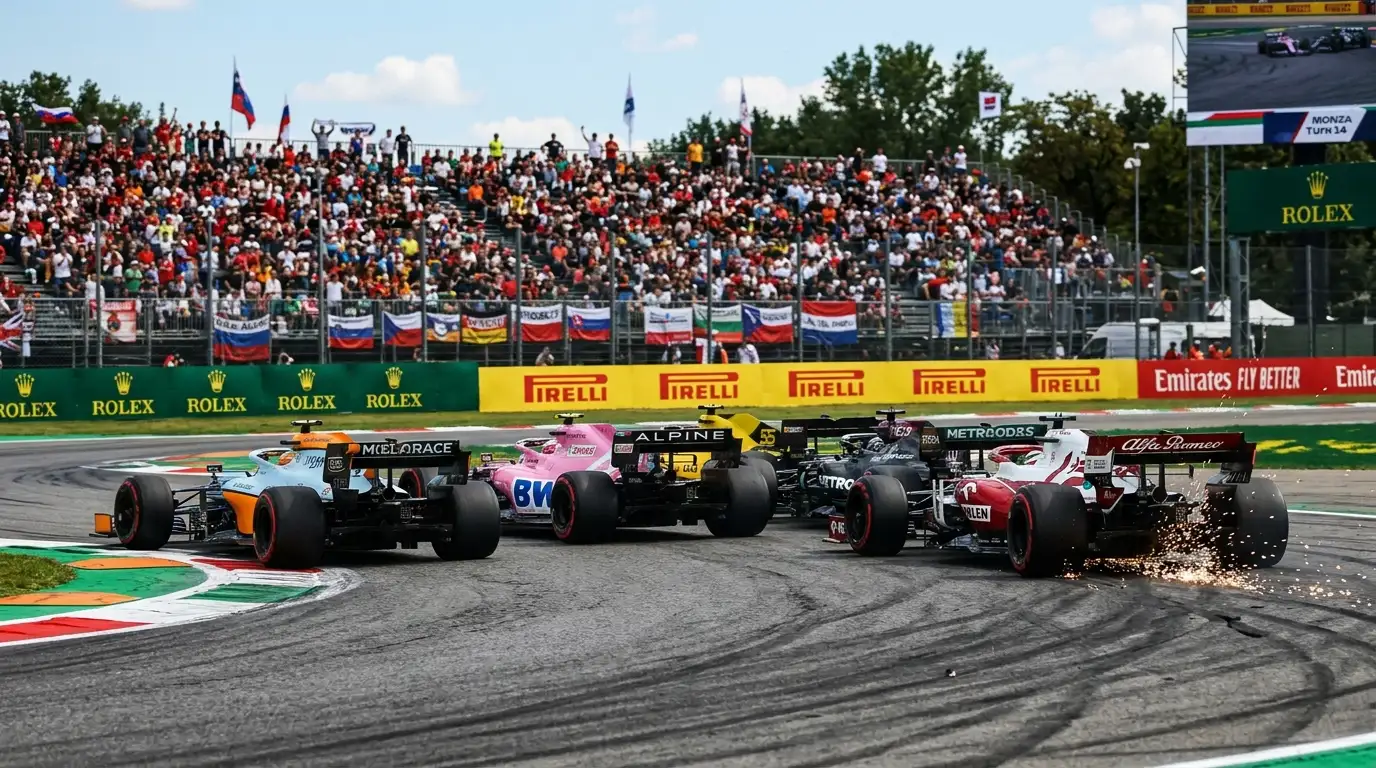
The Quiet Market That Pays the Bills
Every punter I know who turns a seasonal profit from F1 betting has the same dirty secret: their most consistent returns come not from glamorous race winner picks or outright championship bets, but from the unglamorous points finish market. I backed a driver to finish in the top ten at seventeen of twenty-four races in the 2024 season. Fourteen of those bets landed. The individual returns were modest — odds between 1.40 and 2.20 — but the cumulative profit over the season was my most reliable income stream from motorsport wagering.
The points finish market asks whether a driver will finish in the top ten, which is F1’s points-paying zone. From first to tenth, drivers score 25, 18, 15, 12, 10, 8, 6, 4, 2 and 1 point respectively. The market is priced per driver, with odds reflecting their probability of reaching that top-ten cutoff. For drivers from the top four or five teams, the odds are short — 1.20 to 1.50 — because they finish in the points almost every time they complete the race. For drivers from mid-grid and lower teams, the odds stretch to 2.00, 3.00 or beyond, and that is where the analytical work pays off.
Why Points Finish Betting Suits a Bankroll Strategy
The fundamental appeal is strike rate. In any given race, ten of twenty drivers score points. That is a fifty per cent base rate before you apply any analysis. With even basic form knowledge, you can identify drivers whose points probability significantly exceeds fifty per cent but whose odds imply a lower probability. The gap between the true probability and the implied probability is your edge, and it compounds race after race across a full season.
Sixty-three per cent of motorsport bettors wager between one and a hundred pounds per month. That budget is perfectly suited to points finish betting because the stake sizes can be small and the frequency is high — you can place two or three points finish bets per race weekend, every weekend, without straining a modest bankroll. The variance is lower than race winner betting (where you might go four or five races without a winner) and the feedback loop is faster, which helps you refine your process in real time.
The bankroll mathematics work like this. If your average odds are 1.70 and your strike rate is sixty-five per cent, your expected return per bet is 1.70 x 0.65 = 1.105, or a 10.5 per cent edge. Over fifty bets in a season (roughly two per race weekend), that edge compounds into a meaningful return — even before you account for the occasional longer-odds points finish bet that inflates the average.
Identifying Points Finish Value in Mid-Grid Drivers
The top teams’ drivers are almost always priced too short for points finishes to offer value. A driver from the fastest team at 1.15 to score points needs to finish in the top ten 87 per cent of the time just to break even. Their actual rate might be 92 per cent, which gives you a tiny edge that is wiped out by one retirement or one bad weekend. The value lives in the mid-grid — the seventh to tenth-fastest teams, where pricing is less efficient and outcomes more variable.
A driver from the eighth-fastest team might be priced at 2.50 for a points finish. That implies a 40 per cent probability. But if that driver qualifies twelfth, has strong race pace on their tyre compound of choice, and the circuit has a historically high retirement rate that clears space in the top ten, their true points probability might be closer to 55 per cent. At 2.50, you are getting a 55 per cent chance priced as if it were 40 per cent — a substantial overlay.
The variables to track for mid-grid points finish assessment are straightforward. Qualifying position is the baseline — a driver starting in the top fifteen is within realistic striking distance of the points. Race pace relative to qualifying position tells you whether they will gain or lose places on Sunday. And the expected number of retirements at that circuit determines how many positions will open up ahead of them without requiring on-track overtakes. A circuit averaging three retirements per race effectively promotes the eleventh, twelfth and thirteenth-place qualifiers into points-scoring positions for free.
Circuit Types and Points Finish Probability
Not all circuits offer the same points finish dynamics. At circuits where overtaking is easy — Spa, Monza, Bahrain — a strong mid-grid driver can gain multiple positions through the race and push into the top ten from a lower starting position. At circuits where overtaking is difficult — Monaco, Hungary, Zandvoort — qualifying position locks in the order, and a driver who qualifies eleventh has almost no path to the points unless retirements ahead clear the way.
The 1.83-billion cumulative TV audience watches processional races with the same broadcast presentation as chaotic ones, but the betting dynamics are entirely different. At a processional circuit, points finish bets on drivers who qualify inside the top ten at short odds are safe but low-return. Points finish bets on drivers qualifying outside the top ten are poor value because there is no mechanism for them to advance. At a high-overtaking circuit, the picture inverts: qualifying outside the top ten is less of a death sentence, and the points finish odds on twelfth- or thirteenth-place qualifiers with good race pace carry genuine value.
Sprint weekends deserve special attention. The sprint race awards points to the top eight finishers, but the main race points finish market operates on the standard top-ten basis. The sprint itself provides live competitive data — actual race pace on representative fuel loads — that sharpens your Sunday points finish assessment. A driver who gained three places in the sprint through superior race pace is likely to repeat that performance pattern in the main race, and if the points finish odds have not adjusted for the sprint evidence, you have an information edge.
Managing the Downside: When Points Finish Bets Fail
The primary risk in points finish betting is the mechanical retirement. A driver cruising in eighth place who suffers an engine failure on lap forty loses your bet through no fault of their form or your analysis. This is uncontrollable variance, and the only way to manage it is through discipline: never overweight a single points finish bet, spread your selections across multiple drivers and multiple races, and accept that a sixty-five per cent strike rate means thirty-five per cent of your bets will lose.
First-lap incidents are the second risk. A driver starting tenth who is collected in a Turn 1 pile-up is out of the points through bad luck rather than bad pace. Circuits with tight first corners — Melbourne, Monza, Singapore — carry higher first-lap attrition risk for mid-grid drivers, because the pack is most bunched at the start and the positional ambition is highest. At these circuits, I slightly reduce my stakes on points finish bets for drivers starting between eighth and fourteenth, where the first-lap exposure is greatest.
The third risk is strategic: a team choosing to retire a car that is running outside the points in order to save engine mileage for future races. This happens more in the second half of the season, when teams are managing component allocations. If a driver is running fourteenth with no realistic path to the points and their engine is on high mileage, the team may park the car to preserve the power unit. For points finish bettors, this means your driver is withdrawn not because of failure but because of strategic calculation — and the bet is lost either way. Track which teams are in component-saving mode and factor that into your pre-race assessment.
